
If you’re searching for BacktoFrontShow pricing, chances are you’re trying to figure out whether the platform is worth your investment. Pricing is often one of the biggest deciding factors when choosing software, especially if you’re managing a business, running events, or looking for a solution that fits both your needs and your budget. While features and performance matter, understanding the overall value behind a pricing plan is just as important.
In today’s software market, pricing structures have become more flexible than ever. Instead of offering a single flat fee, many platforms now provide multiple subscription options, custom enterprise plans, free trials, and scalable packages designed for different types of users. This makes it essential to understand not only the price but also what you’re actually getting in return.
This comprehensive guide explores everything you need to know about BacktoFrontShow pricing. We’ll discuss the possible pricing models, the factors that influence cost, available features, value for money, comparisons with similar platforms, budgeting tips, and frequently asked questions. Whether you’re a first-time buyer or considering upgrading your existing plan, this guide will help you make a well-informed decision.
Understanding What BacktoFrontShow Offers

Before looking at pricing, it’s important to understand the purpose of BacktoFrontShow. Every software platform is designed to solve specific problems, and pricing generally reflects the value delivered to users. Instead of focusing only on the monthly cost, it’s helpful to consider how much time, effort, and money BacktoFrontShow Pricing the software can save over the long term.
Many modern business platforms include features such as workflow management, customer interaction, automation tools, reporting dashboards, integrations, and collaboration capabilities. If BacktoFrontShow follows a similar model, its pricing is likely based on the number of users, available features, storage capacity, or usage limits rather than offering one universal plan.
Businesses also value reliability, customer BacktoFrontShow Pricingsupport, and regular updates. These benefits are often included within subscription pricing and co ntribute significantly to the platform’s overall value. Paying slightly more for dependable software may ultimately reduce operational costs and improve productivity.
How BacktoFrontShow Pricing Typically Works
Software companies have moved away from one-size-fits-all pricing because customers have different requirements. Small businesses often need affordable entry-level plans, while larger organizations require advanced functionality with additional support.
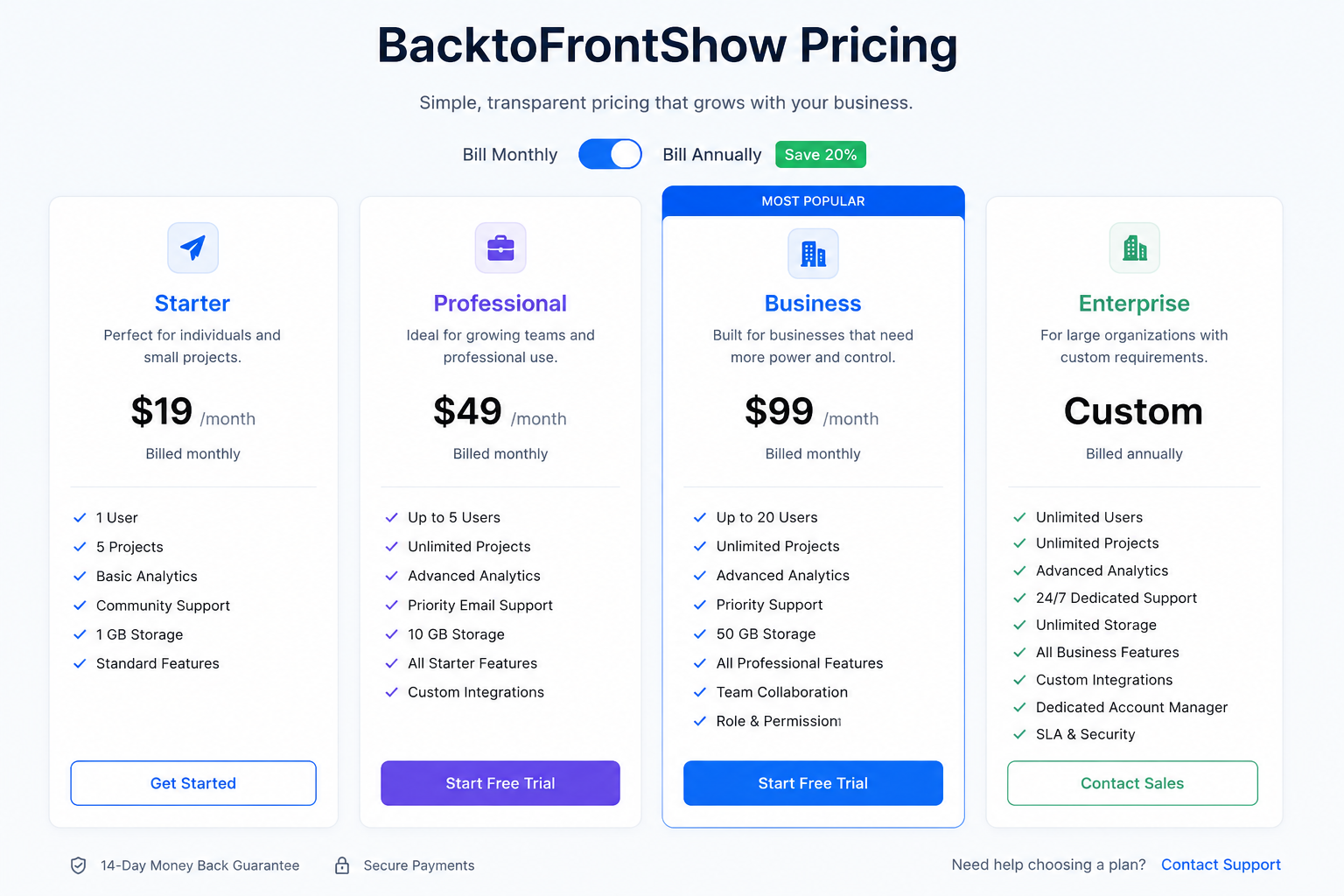
BacktoFrontShow pricing may include several subscription tiers designed to accommodate different user groups. Entry-level plans generally include essential features that allow individuals or small teams to begin using the platform without a significant investment. Mid-level plans often unlock additional automation, collaboration features, and higher usage limits.
Enterprise pricing is commonly customized based on company size, expected usage, implementation requirements, and support needs. Instead of displaying a fixed public price, businesses may need to contact the sales BacktoFrontShow Pricing team to receive a personalized quotation based on their specific requirements.
Factors That Influence BacktoFrontShow Pricing
One of the biggest reasons software pricing varies is that every customer uses the platform differently. A freelancer managing a few projects doesn’t have the same needs as a company with hundreds of employees.
The number of users is one of the most common pricing factors. BacktoFrontShow Pricing Many SaaS platforms charge either per user or according to team size. As your organization grows, monthly costs may increase accordingly.
Feature availability also plays a major role. Basic plans typically provide access to core functionality, while premium subscriptions unlock advanced reporting, automation tools, API access, priority support, enhanced security options, and premium integrations.
Storage requirements may also affect pricing. Businesses handling large amounts of files, documents, videos, or customer information often require additional cloud storage, which may increase subscription costs.
Common Pricing Models Used by Software Platforms
Understanding common SaaS pricing models makes it easier to evaluate BacktoFrontShow pricing if you’re comparing multiple solutions.
Monthly subscriptions offer flexibility because users can cancel whenever necessary. This option is ideal for businesses that want minimal commitment while testing new software.
Annual billing generally provides discounted rates compared to paying month by month. Many companies encourage yearly subscriptions by offering savings that can equal one or two free months.
Usage-based pricing charges customers according to BacktoFrontShow Pricing their activity, storage, bandwidth, transactions, or other measurable metrics. This model ensures businesses only pay for what they actually use.
Custom enterprise pricing allows organizations to negotiate packages that include implementation assistance, dedicated account managers, security enhancements, and specialized support services.
Features That May Be Included in Different Pricing Plans
Software pricing isn’t just about the number on the invoice. The included features determine whether the subscription provides real value.
Lower-tier plans often include dashboard access, basic reporting, limited BacktoFrontShow Pricing integrations, and standard customer support. These packages are suitable for individuals, startups, and smaller businesses beginning their digital journey.
Professional plans typically expand feature availability by adding workflow automation, advanced analytics, collaboration tools, priority email support, increased storage, and additional integrations with third-party applications.
Enterprise subscriptions generally include custom branding, enhanced security controls, unlimited users, dedicated onboarding assistance, API access, compliance tools, priority support, and personalized account management. These premium features justify higher pricing for organizations requiring advanced capabilities.
Is BacktoFrontShow Pricing Worth the Cost?
Value depends on more than the monthly subscription fee. Businesses should evaluate the return on investment rather than focusing solely on price.
If the software saves employees several hours every week through automation, reporting, or improved collaboration, the subscription can quickly pay for itself. Time savings often translate directly into financial savings.
Reliable customer support also contributes BacktoFrontShow Pricing significant value. Fast technical assistance minimizes downtime and allows businesses to continue operating efficiently whenever issues arise.
Regular software updates improve security, introduce new features, and enhance overall performance. Continuous development ensures customers receive increasing value throughout their subscription instead of using outdated software.
Comparing BacktoFrontShow Pricing with Competitors
Every software category contains multiple competitors offering similar services with different pricing structures. Rather than choosing the cheapest option, it’s important to compare overall value.
Some competitors advertise low monthly fees but charge additional costs for integrations, extra users, premium support, or advanced reporting. These hidden expenses can significantly increase the total cost over time.
Other platforms may appear expensive initially but include nearly every feature within a single subscription. This pricing approach often provides better long-term BacktoFrontShow Pricing value because businesses avoid purchasing expensive add-ons later.
When comparing software, create a checklist of the features you actually need. The platform that best meets those requirements at a reasonable total cost is usually the smartest investment.
Tips for Choosing the Right Pricing Plan
Selecting the right subscription begins with understanding your organization’s needs rather than automatically choosing the cheapest or most expensive option.
Estimate how many employees will use the platform during the next twelve months. Purchasing a plan with room for moderate growth can prevent unnecessary upgrades later.
Identify which features are absolutely essential for daily operations. Paying for advanced tools that remain unused rarely provides good value.
Take advantage of free trials or demo BacktoFrontShow Pricing versions whenever available. Testing the platform firsthand offers valuable insight into usability, performance, and feature quality before committing financially.
Review billing policies carefully, including renewal dates, cancellation terms, upgrade options, and refund policies. Understanding these details prevents unexpected charges in the future.
Budgeting for BacktoFrontShow
Software expenses should be viewed as long-term business investments rather than isolated monthly costs. Proper budgeting ensures subscriptions remain sustainable as your organization grows.
Calculate the total annual expense instead of focusing exclusively on monthly payments. Annual budgeting provides a clearer understanding of software spending throughout the year.
Include potential future costs such as additional users, expanded storage, premium integrations, training sessions, or enterprise upgrades. Planning ahead prevents budget surprises later.
Businesses should also evaluate the financial benefits generated by the software. Improved productivity, faster workflows, and reduced manual work often offset subscription costs over time.
Questions to Ask Before Purchasing
Before selecting any pricing plan, gather as much information as possible about the subscription.
Ask whether customer support is available around the clock or only during business hours. Reliable assistance can be invaluable during technical issues.
Determine whether future updates are included within the subscription or require additional payments. Continuous updates help maintain software security and functionality.
Check if there are limits on users, projects, storage, integrations, or reporting capabilities. Understanding these restrictions ensures the selected plan aligns with your operational requirements.
Finally, ask about migration assistance if you’re moving from another platform. A smooth transition minimizes downtime and helps employees adapt more quickly.
Maximizing the Value of Your Subscription
Purchasing software is only the beginning. Organizations gain the greatest value by actively using available features and continuously improving their workflows.
Train team members thoroughly so they understand the platform’s capabilities. Even powerful software delivers limited value if employees only use a small portion of its features.
Review reports and analytics regularly to identify opportunities for process improvements. Many businesses discover new efficiencies simply by analyzing the data generated by their software.
Monitor usage over time to ensure your current pricing plan still matches your needs. If your business grows or downsizes, adjusting your subscription can optimize costs without sacrificing productivity.
Final Thoughts on BacktoFrontShow Pricing
Understanding BacktoFrontShow pricing involves much more than comparing monthly subscription costs. The real value lies in the combination of features, scalability, customer support, security, ongoing updates, and overall business impact. A well-chosen software subscription can improve efficiency, simplify workflows, and deliver measurable returns that far exceed its recurring cost.
Before making a purchase, carefully evaluate your organization’s requirements, compare available plans, estimate future growth, and calculate the long-term value rather than focusing solely on the initial price. Taking a strategic approach helps ensure you select the plan that offers the best balance between affordability and functionality.
Ultimately, the ideal BacktoFrontShow pricing plan is the one that aligns with your business goals, supports your daily operations, and provides enough flexibility to grow alongside your organization. By considering features, scalability, support, and total cost of ownership, you’ll be in a much stronger position to make a confident and informed purchasing decision.