

Introduction
If you’ve ever wondered how to tame a silver fox, you’re not alone. These stunning animals are admired for their striking silver-and-black coats, intelligent personalities, and graceful movements. Whether you’ve seen them in documentaries, wildlife parks, or online videos, it’s easy to understand why people are fascinated by them. However, taming a silver fox is not as simple as training a dog or caring for a domestic cat. It requires patience, knowledge, and a deep understanding of fox behavior.
One of the biggest misconceptions is that a tame fox is the same as a domesticated fox. While some silver foxes have been selectively bred for friendliness through long-term domestication programs, most silver foxes retain many wild instincts. This means that even if they become comfortable around humans, they still behave differently from traditional household pets. Understanding this distinction is essential before considering any interaction with these remarkable animals.
In this guide, we’ll explore everything you need to know about how to tame a silver fox responsibly. We’ll discuss fox behavior, legal considerations, trust-building techniques, training methods, daily care, common mistakes, and much more. By the end of this article, you’ll have a realistic understanding of what it takes to develop a positive relationship with a silver fox while respecting its natural instincts.
What Exactly Is a Silver Fox?

A silver fox is actually a melanistic color variation of the red fox rather than a completely separate species. Their beautiful dark fur features silver-tipped guard hairs that create the unique appearance responsible for their name. These foxes naturally occur in several parts of the world, although many are also bred How to Tame a Silver Fox in controlled environments.
Silver foxes are incredibly intelligent animals. They solve problems quickly, learn routines, and possess excellent memories. This intelligence makes them fascinating companions for experienced handlers, but it also means they become bored easily if they lack mental stimulation. A bored fox can become destructive, noisy, or overly energetic.
Perhaps the most famous silver foxes come from selective breeding experiments that focused on friendliness toward humans over multiple generations. These studies demonstrated that behavior can gradually change through careful breeding. However, even friendly silver foxes continue to display natural fox behaviors like digging, scent marking, climbing, and exploring every corner of their environment.
Can You Really Tame a Silver Fox?
The honest answer is yes—but only under certain circumstances. Taming does not mean eliminating a fox’s wild instincts. Instead, it means helping the fox become comfortable around people through consistent, positive interactions over time.
A fox raised around humans from an early age How to Tame a Silver Fox has a much greater chance of developing trust than an adult wild fox. Young foxes naturally adapt more easily to new experiences, making socialization a critical part of the process. Even then, each fox has its own personality, and some remain more cautious than others.
Attempting to tame a wild silver fox taken directly from nature is not recommended. Wild foxes experience extreme stress when removed from their natural environment, and they may become fearful or defensive. Wildlife rehabilitation professionals understand these challenges and prioritize the animal’s well-being rather than attempting to make it a pet.
Understanding Silver Fox Behavior
Before building trust, it’s important to understand how How to Tame a Silver Fox silver foxes communicate. Unlike dogs, foxes rely on a combination of body language, vocalizations, scent marking, and subtle facial expressions. Learning these signals helps prevent misunderstandings.
A relaxed fox may approach with curiosity, wag its tail gently, and sniff objects or people. In contrast, flattened ears, stiff posture, tucked tails, or repeated retreating often indicate nervousness or discomfort. Respecting these signals is essential because forcing interaction can quickly damage trust.
Silver foxes are naturally curious creatures. They investigate new smells, sounds, and objects constantly. This curiosity can actually work in your favor during taming because the fox often chooses to explore you on its own if given enough time and space.
Preparing the Right Environment
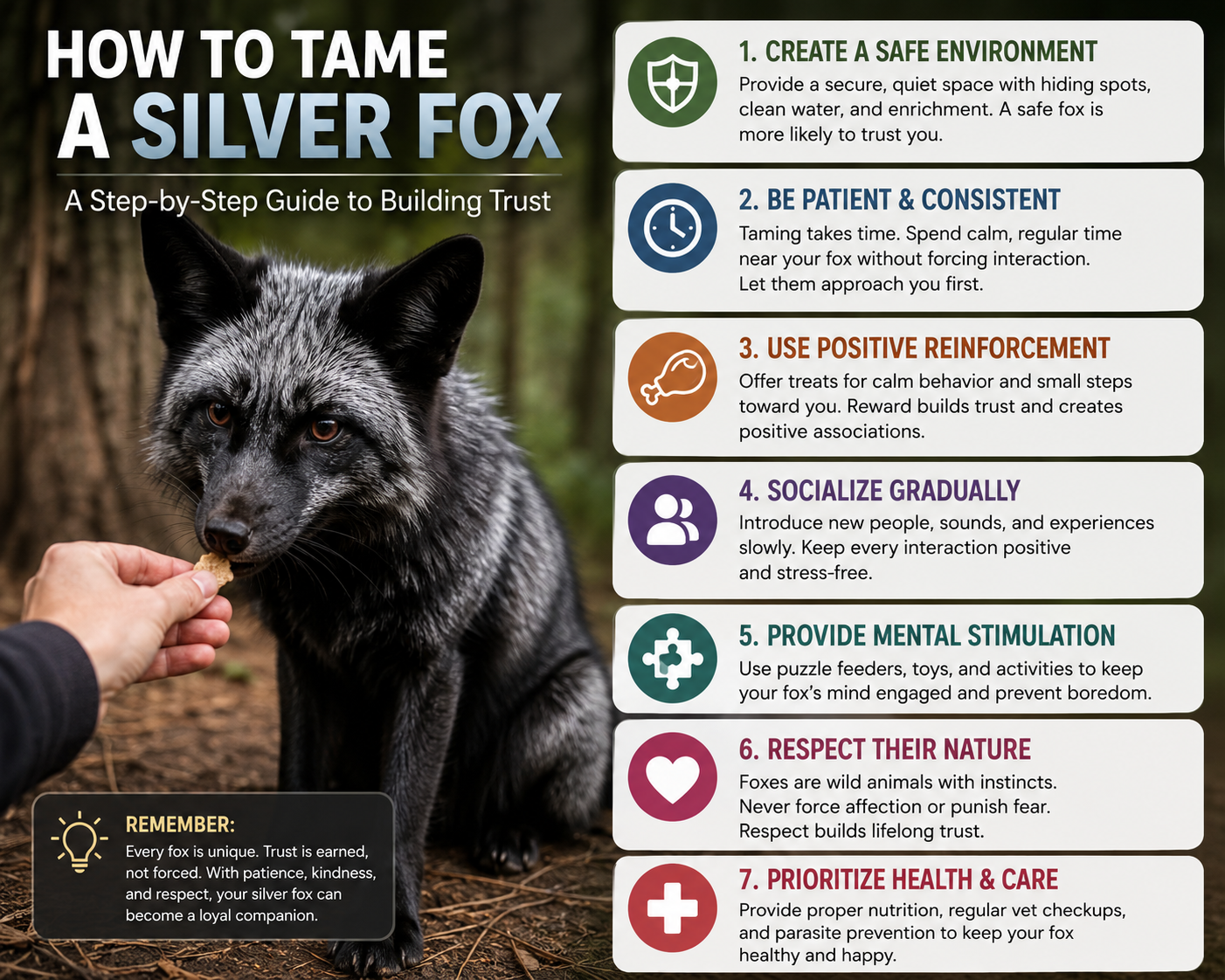
Creating a suitable environment is one of the most important steps when learning how to tame a silver fox. Unlike many domestic pets, foxes require spacious enclosures that allow running, climbing, digging, and exploring. Small cages are unsuitable for their physical and mental health.
A secure outdoor enclosure should include climbing structures, digging areas, shaded spaces, weather protection, enrichment toys, and hiding spots where the fox can retreat whenever it feels overwhelmed. Feeling safe is the foundation of trust.
Inside the enclosure, consistency matters. Keeping food bowls, resting areas, and enrichment items in familiar locations helps reduce stress. Foxes appreciate predictable How to Tame a Silver Fox routines, and knowing what to expect each day makes them feel more comfortable.
Building Trust Step by Step
Trust cannot be rushed. During the early days, simply spending quiet time near the fox without attempting physical contact allows the animal to observe you without pressure. Reading a book, sitting quietly, or speaking softly can help the fox become accustomed to your presence.
Food is one of the most effective trust-building tools. Offering treats from a distance allows the fox to associate your presence with positive experiences. Over time, the distance can gradually decrease as the fox becomes more confident approaching you.
Patience is everything. Some foxes become comfortable within weeks, while others may require several months. Progress should always happen at the fox’s pace rather than yours. Every successful interaction strengthens the relationship.
Using Positive Reinforcement
Positive reinforcement is the safest and most effective training method for silver foxes. Instead of punishing unwanted behaviors, you reward behaviors you want to encourage.How to Tame a Silver Fox This creates positive associations while maintaining the fox’s confidence.
Small food rewards work extremely well because foxes are highly food-motivated. Whenever the fox approaches calmly, follows a cue, or remains relaxed during interaction, rewarding that behavior encourages it to happen again.
Consistency is equally important. Everyone interacting with the How to Tame a Silver Fox should use the same cues and reward system. Mixed signals create confusion and slow the learning process considerably.
Socialization Is Essential
Proper socialization involves gradually introducing the fox to different people, sounds, objects, and environments without overwhelming it. Controlled exposure helps reduce fear while increasing confidence.
Each new experience should be positive. How to Tame a Silver Fox Loud noises, sudden movements, or stressful situations during early socialization can create lasting negative associations. Slow introductions produce much better long-term results.
Remember that socialization never truly ends. Continued exposure to new experiences throughout the fox’s life helps maintain confidence and prevents excessive fearfulness.
Feeding and Nutrition
A healthy diet supports both physical health and How to Tame a Silver Fox behavior. Silver foxes require balanced nutrition that includes quality protein, healthy fats, vitamins, minerals, and appropriate fiber. Nutritional deficiencies can negatively affect mood, energy, and overall well-being.
Many caretakers provide specially formulated fox diets or carefully balanced feeding plans that include lean meats, eggs, selected fruits, vegetables, and supplements when necessary. Fresh water should always be available.
Avoid feeding excessive processed human How to Tame a Silver Fox foods or sugary treats. While occasional rewards are useful during training, the majority of the diet should prioritize nutritional quality rather than convenience.
Mental Stimulation and Enrichment
Foxes are incredibly intelligent problem solvers. Without enough mental stimulation, boredom quickly develops, leading to unwanted behaviors such as chewing, digging excessively, pacing, or attempting to escape.
Puzzle feeders encourage natural How to Tame a Silver Fox foraging behavior while keeping the fox mentally engaged. Hiding treats around the enclosure also provides an enjoyable challenge that mimics searching for food in the wild.
Rotating toys regularly helps maintain interest. Introducing new scents, logs, leaves, tunnels, and climbing opportunities prevents the environment from becoming repetitive.
Common Mistakes to Avoid
One of the biggest mistakes people make is expecting immediate affection. Foxes build trust gradually, and forcing interaction often produces the opposite effect. Allow the fox to initiate contact whenever possible.
Another common mistake is treating a fox exactly like a How to Tame a Silver Fox dog. Although both belong to the canine family, foxes have very different instincts, communication styles, and behavioral needs. Comparing them too closely creates unrealistic expectations.
Ignoring enrichment is another frequent problem. Even friendly foxes require daily mental and physical stimulation. Without it, behavioral issues often appear regardless of how tame the fox seems.
Health Care and Veterinary Support
Regular veterinary care is essential for maintaining a healthy silver fox. Finding a veterinarian experienced with exotic animals before acquiring a fox is one of the smartest decisions you can make.
Routine health checks help detect problems early.How to Tame a Silver Fox Vaccinations, parasite prevention, dental care, and weight monitoring contribute to a longer, healthier life. Preventive care is always easier than treating advanced illnesses.
Observing daily behavior also plays an important role. Changes in appetite, energy level, grooming habits, or activity may indicate underlying health issues that require professional attention.
Legal and Ethical Considerations
Before considering ownership, research local laws carefully. Fox ownership is regulated differently depending on the country, state, or region. Some places How to Tame a Silver Fox prohibit private ownership entirely, while others require permits or special licenses.
Ethical responsibility extends beyond legal compliance. Prospective owners should honestly evaluate whether they have enough space, time, financial resources, and long-term commitment to How to Tame a Silver Fox provide appropriate care throughout the fox’s life.
Supporting responsible breeding programs and avoiding illegal wildlife trade helps protect both captive and wild fox populations. Responsible ownership always prioritizes animal welfare over novelty.
Is a Silver Fox the Right Pet?
Although silver foxes are beautiful and intelligent, they are not ideal pets for most households. Their energy levels, scent-marking behavior, specialized housing requirements, and need for constant enrichment make them far more demanding than traditional companion animals.
People who succeed with foxes usually invest significant time learning How to Tame a Silver Fox about animal behavior before bringing one home. They understand that patience, consistency, and realistic expectations are far more important than quick results.
For many wildlife enthusiasts, observing silver foxes in accredited wildlife centers or conservation facilities may provide a more rewarding and ethical experience than private ownership.
Final Thoughts
Learning how to tame a silver fox begins with understanding that trust cannot be forced. These remarkable animals deserve patience, respect, and environments that allow them to express their natural behaviors. Taming is not about controlling a fox—it is about creating a relationship built on safety, consistency, and positive experiences.
Whether you’re researching silver foxes out of curiosity or considering caring for one in a legal and responsible setting, remember that every fox is an individual. Some become highly social, while others remain reserved despite excellent care. Accepting their unique personalities is part of respecting them as intelligent wild animals.
Ultimately, successful taming is How to Tame a Silver Fox measured not by tricks or obedience but by mutual trust. When a silver fox willingly approaches you, feels comfortable in your presence, and lives a healthy, enriched life, you’ve achieved something far more meaningful than simply training an animal—you’ve earned its confidence through patience and understanding.