

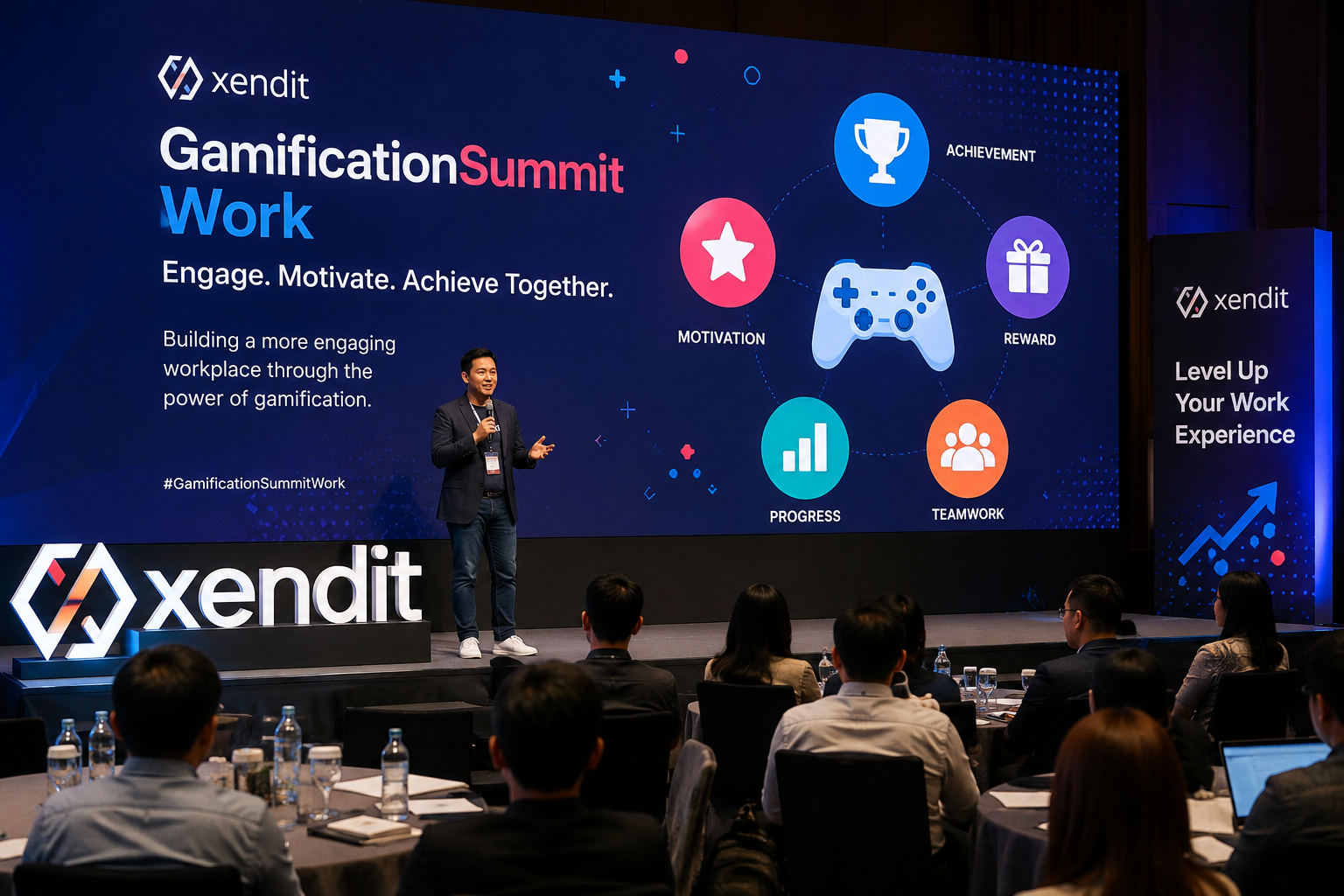
Introduction
Xendit GamificationSummit Work The modern workplace is changing faster than ever. Companies are no longer relying solely on traditional management techniques to keep employees engaged and motivated. Instead, organizations are exploring creative approaches that improve collaboration, productivity, and employee satisfaction. One of the most talked-about strategies is gamification, a concept that applies game-inspired elements to everyday work. The phrase Xendit GamificationSummit Work has become associated with discussions around how innovative businesses can use gamification to create better work environments, encourage continuous learning, and improve overall performance.
Gamification is much more than simply awarding badges or creating leaderboards. It is about understanding human motivation and designing experiences that encourage people to complete tasks with greater enthusiasm. Businesses that successfully implement gamification often see improvements in employee engagement, customer satisfaction, and operational efficiency. As companies become increasingly digital, these techniques are becoming even more valuable.
This article explores what Xendit GamificationSummit Work represents, how gamification influences workplace culture, the technologies behind it, its benefits, challenges, practical implementation strategies, and why it continues to gain attention across industries. Whether you’re a business owner, HR professional, or someone interested in workplace innovation, understanding gamification can provide valuable insights into the future of work.
Understanding Xendit GamificationSummit Work
Xendit GamificationSummit Work refers to conversations and ideas centered around integrating gamification into professional environments. It highlights how organizations can motivate employees, improve teamwork, and encourage skill development by using principles commonly found in games. Instead of viewing work as repetitive or stressful, employees experience greater engagement when achievements, progress tracking, and recognition become part of daily operations.
Gamification focuses on human psychology. People naturally enjoy completing challenges, earning rewards, reaching milestones, and seeing measurable progress. By incorporating these elements into workplace systems, companies can transform routine tasks into meaningful accomplishments. Employees become more willing to participate because their efforts receive immediate recognition rather than waiting for annual performance reviews.
Events and discussions connected with workplace gamification often emphasize practical strategies rather than theoretical concepts. Businesses share real-world experiences, discuss successful implementation techniques, examine technological tools, and evaluate measurable improvements in productivity. These conversations Xendit GamificationSummit Work help organizations learn from one another while adapting gamification methods that fit their unique workplace culture.
The Core Principles Behind Workplace Gamification
One of the biggest reasons gamification works is because it aligns with natural human behavior. Most individuals enjoy solving problems, achieving goals, and receiving positive feedback. These motivations exist regardless of whether someone is playing a game or completing professional responsibilities. Effective workplace gamification simply Xendit GamificationSummit Work redirects these psychological triggers toward productive business objectives.
Clear goals form the foundation of successful gamification. Employees need to understand exactly what they are working toward and how their progress is measured. Transparent objectives reduce confusion while encouraging consistent performance. When progress is visible, individuals remain motivated because they can see their improvement over time.
Recognition is another essential principle. Employees appreciate acknowledgment for their contributions, whether through digital badges, achievement levels, certificates, or public appreciation. Recognition strengthens confidence and encourages continued participation. Unlike financial incentives alone, recognition satisfies emotional needs that contribute to long-term motivation.
How Gamification Improves Employee Engagement
Employee engagement remains one of the greatest challenges facing organizations today. Even highly skilled professionals may lose motivation when work becomes repetitive or lacks visible progress. Gamification introduces interactive elements that make everyday responsibilities more rewarding and enjoyable without reducing professionalism.
One significant advantage is increased participation in workplace initiatives. Employees are often more willing to complete training sessions, attend workshops, contribute ideas, or participate in collaborative projects when gamified systems provide immediate rewards. This creates a more active workplace culture where continuous improvement becomes part of everyday routines.
Gamification also strengthens communication across departments. Xendit GamificationSummit Work Team-based challenges encourage employees to collaborate instead of competing in unhealthy ways. Shared objectives build stronger relationships while reducing organizational silos. As teams celebrate achievements together, trust naturally develops, leading to improved cooperation on future projects.
The Role of Technology in Gamification
Technology serves as the backbone of modern gamification systems. Digital platforms allow businesses to monitor performance, assign challenges, track achievements, and distribute rewards automatically. Xendit GamificationSummit Work his automation makes gamification practical even for large organizations with thousands of employees.
Artificial intelligence has further expanded the possibilities. AI-powered platforms can personalize challenges based on employee performance, recommend learning resources, and identify opportunities for improvement. Rather than applying the same system to everyone, businesses can deliver customized experiences that better match individual strengths and career goals.
Cloud-based solutions also make gamification accessible from anywhere. Xendit GamificationSummit Work Remote employees can participate in challenges, monitor progress, communicate with teammates, and receive recognition regardless of their physical location. This flexibility has become increasingly valuable as hybrid and remote work models continue growing across industries.
Benefits of Xendit GamificationSummit Work for Businesses
Organizations adopting workplace gamification often report measurable improvements across multiple performance indicators. Productivity frequently increases because employees become more motivated to complete tasks efficiently while maintaining quality standards. Rather than viewing assignments as obligations, they see opportunities to achieve goals and earn recognition.
Learning and development programs also become more effective through gamification. Traditional training sessions sometimes struggle to maintain employee attention, but interactive modules, quizzes, progress tracking, and achievement systems significantly improve knowledge retention. Employees enjoy learning because they experience continuous Xendit GamificationSummit Work progress throughout the process.
Customer service departments also benefit from gamified environments. Representatives who receive recognition for excellent service, quick response times, or high customer satisfaction scores often remain more motivated. This positive attitude ultimately improves customer experiences while supporting long-term business growth.
Gamification and Employee Learning
Continuous learning has become essential in today’s competitive business environment. Xendit GamificationSummit Work New technologies, changing customer expectations, and evolving market conditions require employees to develop new skills regularly. Gamification transforms learning from a mandatory requirement into an engaging experience.
Interactive learning platforms often divide educational content into smaller achievements that employees can complete gradually. Instead of facing overwhelming training programs, learners progress through manageable milestones that build confidence while maintaining motivation. This approach increases completion rates significantly compared to traditional learning methods.
Healthy competition also encourages knowledge sharing. Employees may challenge colleagues, participate in quizzes, solve workplace scenarios, or collaborate to unlock team achievements. These activities reinforce Xendit GamificationSummit Work learning while making educational experiences enjoyable rather than stressful.
Building a Positive Workplace Culture
Company culture directly influences employee satisfaction, retention, and productivity. Gamification contributes to positive workplace culture by encouraging appreciation, collaboration, and continuous improvement. Employees feel valued when their accomplishments receive regular recognition rather than remaining unnoticed.
Transparency also improves through gamified systems. Everyone understands how achievements are measured, reducing uncertainty regarding performance expectations. Employees gain confidence because success depends on clearly defined objectives rather than subjective evaluations.
Positive workplace culture extends beyond individual recognition. Team accomplishments become equally important, encouraging collaboration instead of unhealthy competition. Organizations that balance personal achievements with group success often create stronger relationships among employees while improving overall business performance.
Challenges of Implementing Workplace Gamification
Although gamification offers numerous advantages, implementation requires careful planning. Poorly designed systems may create excessive competition or encourage employees to prioritize rewards over meaningful work. Organizations should ensure that gamification supports business objectives rather than distracting from them.
Another common challenge involves maintaining long-term interest. Initial excitement may decline if challenges become repetitive or rewards lose their appeal. Businesses should continuously update activities, introduce new objectives, and gather employee feedback to keep the experience fresh and engaging.
Fairness also remains essential. Employees must believe that achievements accurately reflect performance. Transparent scoring systems, equal participation opportunities, and balanced recognition help maintain trust while preventing frustration among team members.
Best Practices for Successful Gamification
Organizations considering workplace gamification should begin by identifying clear objectives. Whether improving productivity, increasing training participation, or enhancing customer service, every gamification initiative should support measurable business goals. Without clear direction, even well-designed systems may fail to produce meaningful results.
Employee feedback should remain central throughout implementation. Involving team members during planning helps organizations understand motivational preferences while identifying potential concerns before launching new systems. Employees who contribute ideas often become stronger supporters of the final program.
Regular evaluation is equally important. Companies should monitor participation rates, employee satisfaction, productivity metrics, and overall business performance. Continuous improvement ensures that gamification remains effective as organizational needs evolve over time.
The Future of Xendit GamificationSummit Work
The future of workplace gamification appears increasingly promising as digital transformation accelerates worldwide. Artificial intelligence, predictive analytics, augmented reality, and virtual reality are expected to create even more immersive employee experiences. These technologies will enable businesses to deliver highly personalized learning paths, performance challenges, and collaborative activities.
Data analytics will also become more sophisticated. Organizations will better understand employee behavior, motivation patterns, and productivity trends through detailed insights generated by gamified platforms. This information will support smarter decision-making while helping managers create more supportive work environments.
As younger generations enter the workforce, expectations surrounding workplace engagement continue evolving. Employees increasingly value meaningful experiences, continuous feedback, professional development, and recognition. Gamification aligns naturally with these expectations, making it an increasingly relevant strategy for modern organizations.
Conclusion
Xendit GamificationSummit Work represents an exciting perspective on the future of workplace engagement. By combining psychology, technology, and thoughtful management strategies, gamification transforms ordinary work into an environment where employees feel motivated, recognized, and empowered to succeed. Rather than relying solely on financial incentives, organizations create experiences that encourage continuous improvement, collaboration, and innovation.
Successful gamification extends far beyond points and badges. It involves designing meaningful systems that align employee motivation with business objectives while supporting personal growth. Companies that carefully implement gamification often experience stronger teamwork, higher productivity, improved learning outcomes, and greater employee satisfaction.
As businesses continue embracing digital transformation, workplace gamification is likely to become an increasingly valuable tool. Organizations willing to invest in engaging employee experiences will be better positioned to attract top talent, retain skilled professionals, and adapt to the changing demands of the modern workplace. Understanding the principles behind Xendit GamificationSummit Work can help companies build healthier, more productive, and more rewarding work environments for years to come.