

Introduction
LinkedIn Login LinkedIn has become the world’s largest professional networking platform, connecting millions of professionals, job seekers, recruiters, business owners, and students. Whether you want to apply for jobs, expand your network, share industry insights, or build your personal brand, your journey starts with a successful LinkedIn login. Although logging in sounds like a simple task, many users encounter issues related to passwords, verification codes, browser settings, or account security that can interrupt their experience.
Understanding how the LinkedIn login process works helps you avoid unnecessary problems and keeps your account secure. From signing in on desktop computers to accessing your profile through the mobile app, LinkedIn offers several convenient login methods that are designed to balance ease of use with strong security. Learning these methods can save time while protecting your professional information from unauthorized access.
This comprehensive guide covers everything you need to know about LinkedIn login. You’ll learn how to sign in, troubleshoot common login issues, recover your account, improve security, and make the most of your LinkedIn experience. Whether you’re a first-time user or someone who has been using LinkedIn for years, this guide will help you navigate the platform with confidence.
Understanding the LinkedIn Login Process

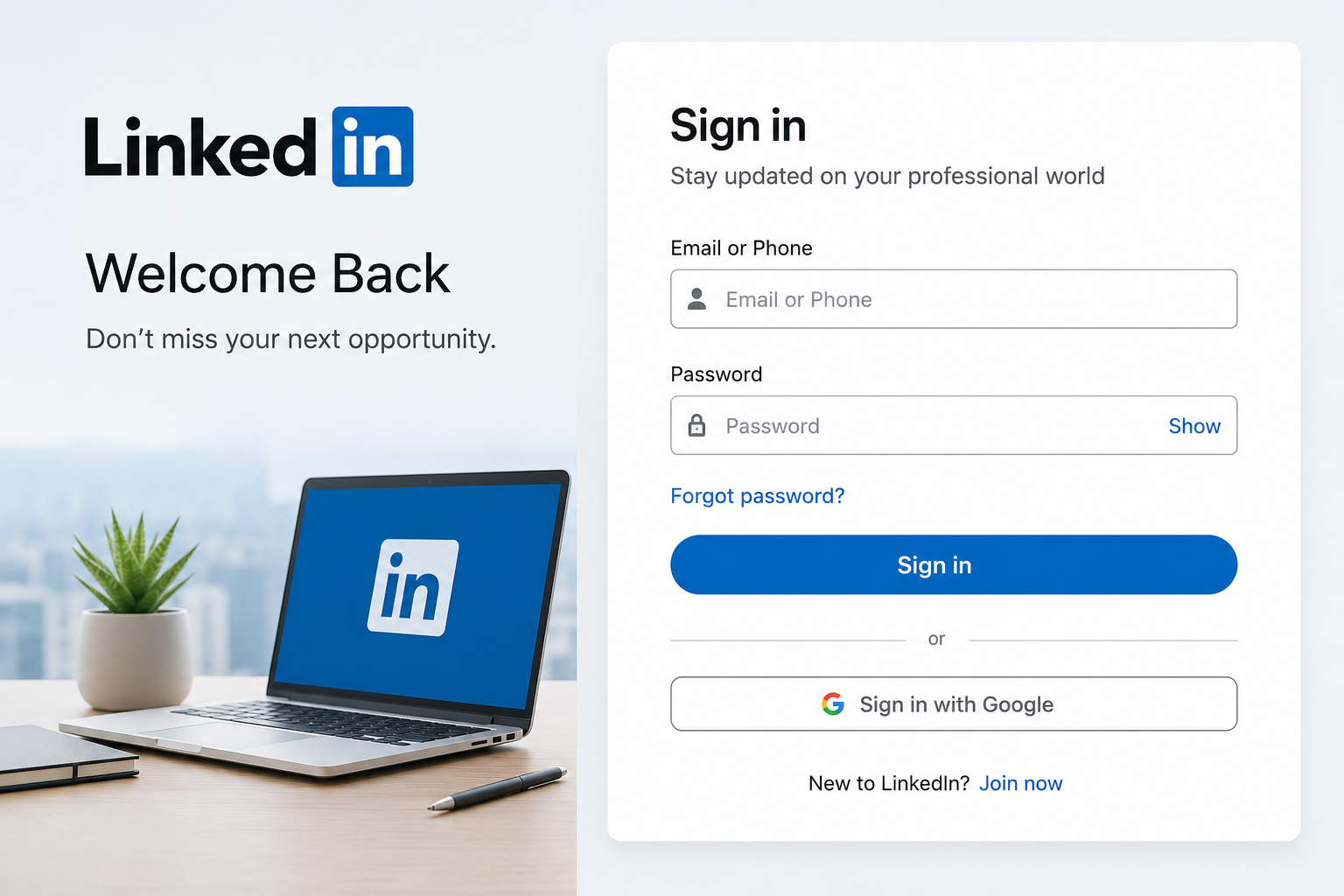
The LinkedIn login process is designed to be quick, secure, and accessible across multiple devices. When you visit the LinkedIn website or open the mobile application, you’ll be asked to enter the email address or phone number associated with your account, followed by your password. Once your credentials are verified, you’ll gain access to your professional profile, connections, messages, job applications, and activity feed.
One of the strengths of LinkedIn’s login system is its consistency across platforms. Whether you’re signing in from Windows, macOS, Android, or iPhone, the overall experience remains similar. This makes it easy for users who frequently switch between devices during work or travel. LinkedIn also remembers trusted devices, reducing the need for repeated verification while still maintaining account security.
Behind the scenes, LinkedIn uses encrypted connections LinkedIn Login and advanced security technologies to protect user information during login. The platform continuously monitors unusual login attempts and may request additional identity verification if suspicious activity is detected. These security measures help ensure that only the rightful account owner gains access.
How to Log In to LinkedIn on Different Devices
Logging into LinkedIn from a desktop computer is straightforward. Open your preferred browser, visit the LinkedIn homepage, enter your registered email address or phone number, type your password, and click the Sign In button. Within seconds, you’ll arrive at your LinkedIn home feed where you can begin networking, messaging, LinkedIn Login or searching for opportunities.
For mobile users, the LinkedIn app provides an optimized experience. After downloading the application from your device’s app store, simply launch it and enter your login credentials. Many smartphones also support biometric authentication such as fingerprint scanning or facial recognition, allowing you to access LinkedIn even faster while LinkedIn Login maintaining strong security.
Tablet users enjoy a similar experience, benefiting from larger screens that make profile editing, messaging, and job searching more comfortable. Because LinkedIn synchronizes your account across all devices, any updates you make on one device automatically appear everywhere else once you’re logged in.
Creating Strong Login Credentials
Choosing a secure password is one of the most important steps LinkedIn Login in protecting your LinkedIn account. Weak passwords are among the leading causes of compromised online accounts. Instead of using simple words or predictable combinations, create a password that includes uppercase letters, lowercase letters, numbers, and special characters.
Avoid reusing passwords from other websites. If another service experiences a data breach, attackers often try the same password on multiple platforms, including LinkedIn. Using a unique password significantly reduces this risk and strengthens your overall online security.
Password managers can also simplify account management. These tools generate highly secure passwords and store them safely, allowing you to log into LinkedIn without having to memorize complex combinations. This improves both convenience and security.
Common LinkedIn Login Problems and Their Solutions
Forgetting your password is one of the most common login issues. LinkedIn Login Fortunately, LinkedIn provides a password recovery option that allows you to reset your password using your registered email address or phone number. After verifying your identity, you’ll receive instructions to create a new password and regain access.
Sometimes users enter the correct credentials but still cannot log in. This may happen due to browser cache issues, outdated cookies, or temporary server problems. Clearing your browser cache, trying another browser, or using Incognito Mode often resolves these problems quickly without requiring additional technical knowledge.
Another common issue occurs when users no longer have access to the email address associated with their LinkedIn account. In such situations, LinkedIn provides an identity verification process that helps legitimate users recover their accounts. Keeping your recovery information updated makes this process much easier if you ever need assistance.
Two-Step Verification and Login Security
Two-step verification adds another layer of protection to your LinkedIn LinkedIn Login account. Instead of relying solely on your password, LinkedIn requests an additional verification code sent to your mobile device or generated through an authentication application. This significantly reduces the likelihood of unauthorized access.
Even if someone manages to obtain your password, they still won’t be able to log into your account without the second verification factor. This makes two-step verification one of the most effective security features available to LinkedIn users.
Many professionals use LinkedIn to communicate with recruiters, business partners, and clients. Because these conversations often contain sensitive information, enabling two-step verification is a smart investment in protecting your professional reputation and personal data.
Recovering a Locked or Restricted LinkedIn Account
LinkedIn may temporarily restrict an account if unusual login behavior LinkedIn Login is detected. This doesn’t necessarily mean your account has been hacked. In many cases, logging in from a new country, multiple failed password attempts, or suspicious activity triggers additional security measures.
If your account becomes restricted, carefully follow LinkedIn’s verification instructions. You may need to confirm your identity by verifying your email, entering a security code, or submitting identification documents. These procedures help ensure that the account remains protected from unauthorized access.
Patience is important during the recovery process. Identity verification may take some time depending on the complexity of your case. Once verified, you’ll regain access to your profile and can continue using LinkedIn normally.
Tips for Keeping Your LinkedIn Login Secure
Always log out when using public or shared computers. Remaining signed in on a public device increases the risk of unauthorized access, especially if others use the same computer after you.
Avoid clicking suspicious links claiming to be from LinkedIn. Cybercriminals frequently create fake login pages designed to steal usernames and passwords. Always check the website address before entering your credentials and ensure you’re using the official LinkedIn website or mobile application.
Regularly review your account’s security settings and connected devices. If you notice unfamiliar login locations or devices, immediately change your password and revoke access from unknown sessions. Staying proactive helps prevent larger security issues.
Benefits of Staying Logged Into LinkedIn
Remaining logged into LinkedIn on your personal device offers several conveniences. You receive real-time notifications about job opportunities, connection requests, direct messages, and profile views without repeatedly entering your credentials.
Professionals who actively engage with LinkedIn often check the platform multiple times each day. Staying signed in allows quicker access to networking opportunities, industry updates, and recruiter messages that may require timely responses.
However, this convenience should only be used on trusted personal devices protected with strong passwords or biometric authentication. Public computers should never be configured to remember your LinkedIn login details.
Best Practices for Managing Multiple LinkedIn Accounts
Some professionals maintain separate LinkedIn accounts for different purposes, although LinkedIn generally recommends having only one personal account. Managing multiple accounts can create confusion during login and increase the risk of accidentally violating platform policies.
If your work requires managing business pages, use LinkedIn’s administrative features instead of creating duplicate personal profiles. This keeps your professional identity organized while allowing you to manage multiple company pages efficiently.
When switching between accounts, always verify which account you’re currently using before sending messages, posting updates, or applying for jobs. Small mistakes can sometimes create confusion in professional communications.
LinkedIn Login for Job Seekers
For job seekers, logging into LinkedIn regularly is extremely valuable. Recruiters frequently search for candidates, and timely responses to messages can significantly improve employment opportunities. Missing recruiter messages because you rarely log in could mean missing valuable career prospects.
LinkedIn also recommends jobs based on your profile, experience, and activity. Frequent logins help personalize these recommendations, making your job search more efficient and relevant to your career goals.
Updating your profile after logging in also increases visibility. Recruiters often prioritize active users who maintain current information, professional photos, and detailed work histories. Consistent activity signals engagement and professionalism.
LinkedIn Login for Business Professionals
Business owners, entrepreneurs, and marketers rely on LinkedIn to build relationships, generate leads, and establish authority within their industries. Logging in consistently allows them to engage with clients, publish valuable content, and participate in meaningful discussions.
Sales professionals also benefit from frequent access to LinkedIn. Building relationships through personalized messages, thoughtful comments, and industry insights creates trust that can eventually lead to business opportunities and partnerships.
Executives and company leaders use LinkedIn to strengthen employer branding by sharing updates, celebrating achievements, and highlighting company culture. Regular login habits make it easier to remain active and visible within professional communities.
Frequently Asked Questions About LinkedIn Login
Many users wonder whether they can log into LinkedIn using either their email address or phone number. If both are properly associated with the account, LinkedIn generally allows either option, making account access more flexible and convenient.
Another common question concerns password changes. Users can update their LinkedIn password anytime through account settings, and doing so regularly is considered a good cybersecurity practice, especially if they suspect their credentials may have been exposed elsewhere.
Some users also ask whether LinkedIn automatically logs them out. This can happen due to inactivity, security updates, browser settings, or manual sign-outs from other devices. While occasionally inconvenient, these automatic logouts contribute to better account protection.
Conclusion
LinkedIn login is much more than entering an email address and password. It serves as the gateway to your professional identity, career opportunities, business relationships, and personal brand. Understanding how the login system works, maintaining strong security practices, and knowing how to resolve common login issues can save time while protecting your valuable information.
Whether you’re searching for your next job, growing your professional network, recruiting talent, or expanding your business, secure and reliable access to LinkedIn is essential. By using strong passwords, enabling two-step verification, monitoring account activity, and following safe browsing habits, you can confidently enjoy everything LinkedIn has to offer.
As LinkedIn continues introducing new features and improving security technologies, staying informed about login best practices remains important. A secure LinkedIn account not only protects your personal information but also safeguards your professional reputation, allowing you to focus on networking, career growth, and long-term success with peace of mind.