

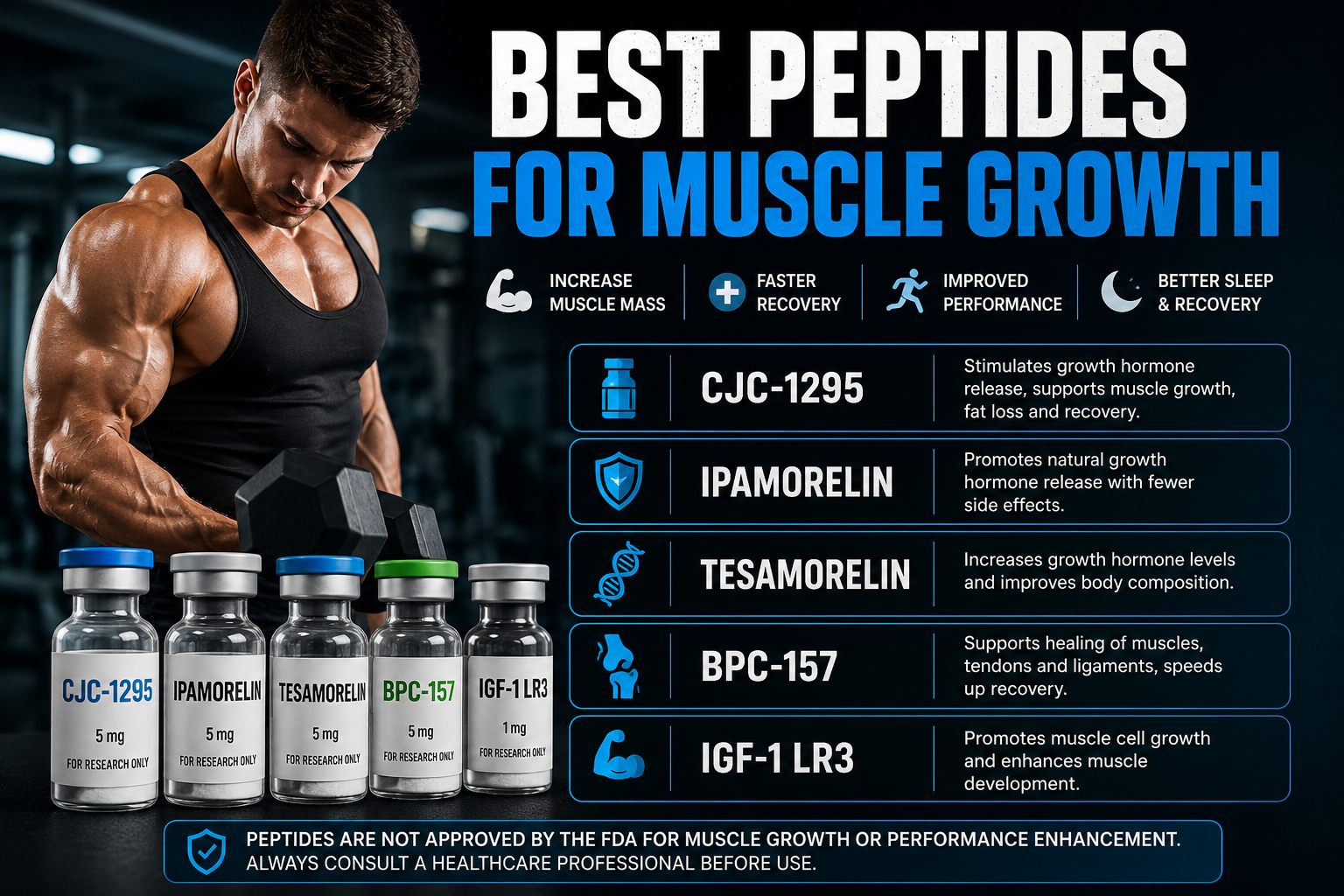
Best Peptides for Muscle Growth Building muscle has always been a combination of smart training, proper nutrition, and consistent recovery. However, over the past few years, peptides have become one of the most talked-about topics in the fitness industry. Many bodybuilders, athletes, and fitness enthusiasts are curious about whether peptides can actually help increase muscle mass, improve recovery, and enhance performance. While some peptides have shown promising results in research and medical settings, it’s important to understand that not all peptides are approved for muscle-building purposes, and many carry health and legal considerations.
This guide explores the best peptides for muscle growth, explains how they work, discusses their potential benefits and risks, and highlights natural ways to maximize muscle gains. Whether you’re just starting your fitness journey or you’re an experienced lifter looking to understand the science behind peptides, this article provides balanced and practical information.
Rather than promoting shortcuts, this guide focuses on evidence-based knowledge so you can make informed decisions about your health and fitness goals.
What Are Peptides and How Do They Work?
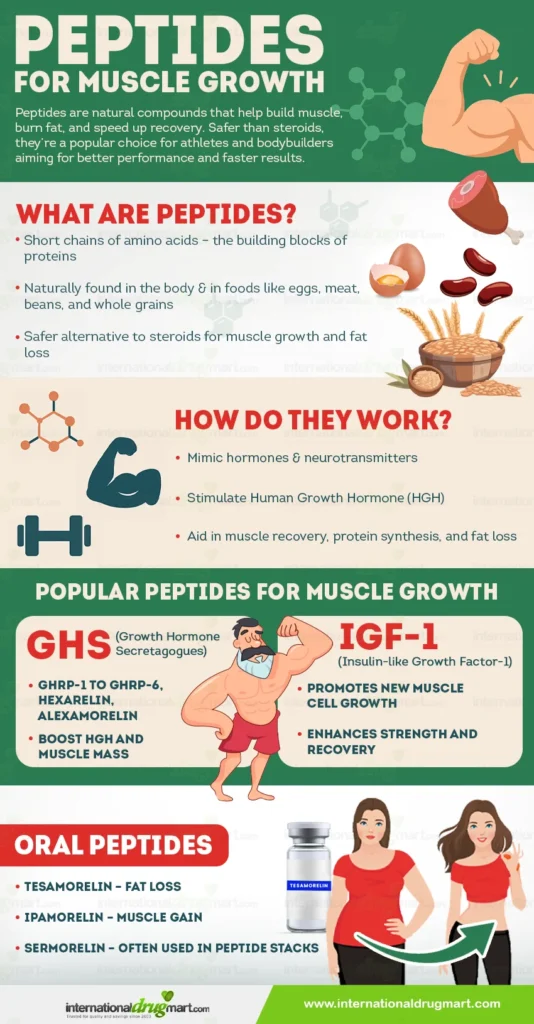
Peptides are short chains of amino acids, which are the Best Peptides for Muscle Growth buildng blocks of proteins. They naturally exist in the human body and play an important role in many biological functions, including hormone production, tissue repair, immune response, and muscle recovery. Scientists have also developed synthetic peptides for research and certain medical treatments.
Some peptides work by signaling the body to release more growth hormone or by influencing other biological pathways involved in muscle repair. Growth hormone itself supports protein synthesis, recovery, and tissue regeneration, which is why peptides that affect growth hormone have become popular among some athletes.
It’s important to understand that peptides are not the same as anabolic steroids. Steroids directly introduce synthetic hormones into the body, while certain peptides stimulate natural biological processes. Even so, many peptides intended for muscle growth remain investigational or require medical supervision, and their long-term safety is not fully established.
Why Peptides Have Become Popular in Fitness
One of the biggest reasons peptides have gained attention Best Peptides for Muscle Growth is their potential to improve recovery after intense workouts. Faster recovery may allow athletes to train more consistently, which can contribute to muscle growth over time when paired with proper nutrition and resistance training.
Another factor is the growing interest in performance optimization. Social media, online fitness communities, and bodybuilding forums often discuss peptides as an alternative to anabolic steroids. This has increased curiosity among people looking for lean muscle gains with potentially fewer hormonal side effects.
However, popularity does not necessarily mean safety or effectiveness. Many products sold online are unregulated, may contain inaccurate ingredients, or may not contain the advertised peptide at all. Anyone considering peptide therapy should understand these risks and consult a qualified healthcare professional.
Common Peptides Associated With Muscle Growth
CJC-1295
Some users report improvements in muscle recovery, sleep quality, and lean muscle development when combined with structured resistance training and proper nutrition. Better recovery may indirectly support greater training volume over time.
Although CJC-1295 has been studied for medical purposes, its use specifically for muscle growth remains limited outside research settings. It is not approved in many countries for bodybuilding, and athletes should be aware of anti-doping regulations.
Ipamorelin
Ipamorelin is another peptide commonly mentioned alongside Best Peptides for Muscle Growth CJC-1295. It belongs to a group known as growth hormone secretagogues and encourages the release of growth hormone without significantly affecting some other hormones that older compounds influenced.
Many people are interested in Ipamorelin because it may support recovery while producing fewer unwanted hormonal fluctuations compared to earlier compounds. Some users also claim improvements in sleep and reduced muscle soreness after workouts.
Scientific evidence for muscle-building benefits in healthy athletes is still limited, and long-term safety data remain incomplete. Anyone considering medical peptide therapy should do so only under Best Peptides for Muscle Growth professional supervision.
Tesamorelin
Tesamorelin is a prescription peptide approved for a specific medical Best Peptides for Muscle Growth condition involving excess abdominal fat in certain patients with HIV. Because it increases growth hormone release, it has attracted attention in the fitness world.
Research has demonstrated effects on body composition in the approved medical population, but those findings should not be interpreted as evidence that it is appropriate or safe for healthy individuals seeking muscle growth.
Using prescription medications outside their approved purpose carries risks and should only occur under the guidance of a licensed healthcare provider.
BPC-157
BPC-157 is often discussed for its potential role in recovery rather than direct muscle growth. Laboratory and animal research has explored its possible effects on tendon healing, ligament repair, and tissue regeneration.
Fitness enthusiasts sometimes believe faster recovery could allow more productive training sessions, indirectly contributing to muscle gains. However, there is currently a lack of high-quality human evidence confirming these benefits for athletes.
Because of the limited clinical data, claims about BPC-157 should Best Peptides for Muscle Growth be approached with caution.
IGF-1 Related Compounds
Insulin-like Growth Factor 1, commonly known as IGF-1, plays an Best Peptides for Muscle Growth important role in muscle development and cell growth. Some research compounds related to IGF-1 have been explored for their potential anabolic effects.
These compounds may influence muscle protein synthesis, but they also carry significant health risks, including effects on blood sugar regulation and abnormal tissue growth. Their use outside legitimate medical research is not recommended.
Most athletes should focus on proven training methods rather than relying on experimental compounds with uncertain safety profiles.
Potential Benefits of Peptides for Muscle Growth
One of the most commonly reported benefits is improved recovery Best Peptides for Muscle Growth between workouts. Faster recovery can reduce soreness and make it easier to maintain a consistent training schedule, which is essential for long-term muscle development.
Some peptides may support increased growth hormone production, which plays a role in protein synthesis and tissue repair. These biological processes contribute to muscle maintenance and adaptation following resistance exercise.
Users also report improvements in sleep quality and overall recovery, both of which are critical for muscle growth. During deep sleep, the body naturally releases growth hormone and repairs damaged muscle tissue. Better sleep can therefore enhance the effectiveness of a well-designed training program.
Possible Risks and Side Effects
Although peptides are often marketed as safer alternatives, they Best Peptides for Muscle Growth are not free from risks. Side effects vary depending on the specific compound and individual health conditions. Common concerns include swelling, joint discomfort, headaches, injection site reactions, and changes in blood sugar levels.
Another major concern is product quality. Many peptides sold online are not regulated and may contain impurities, incorrect dosages, or completely different substances than advertised. This increases the risk of unexpected health complications.
Athletes should also remember that many peptides are prohibited by sports organizations. Testing positive during competition can result in suspensions, loss of titles, or permanent damage to an athletic career.
Do Peptides Replace Proper Training and Nutrition?
No supplement or peptide can replace the fundamentals of Best Peptides for Muscle Growth muscle growth. Progressive overload, adequate protein intake, calorie management, sufficient sleep, and consistent training remain the foundation of building lean muscle.
Even if a compound has biological effects, those effects are limited without proper exercise and nutrition. Muscle tissue grows because it adapts to resistance training combined with adequate recovery and protein availability.
Many successful athletes achieve impressive physiques without using investigational compounds. Their results come from years of disciplined training, balanced diets, and consistent habits rather than relying on shortcuts.
Natural Alternatives That Support Muscle Growth
For most people, natural strategies offer a much safer and more Best Peptides for Muscle Growth sustainable path toward building muscle. Consuming enough high-quality protein throughout the day provides the amino acids needed for muscle repair and growth.
Creatine monohydrate is one of the most thoroughly researched sports supplements available. It has consistently demonstrated benefits for strength, power output, and lean muscle gains when combined with resistance training.
Adequate sleep, stress management, hydration, and intelligent workout programming also play major roles in maximizing muscle growth. These evidence-based habits often provide greater long-term results than chasing experimental performance-enhancing compounds.
Who Should Avoid Using Peptides?
Individuals with underlying medical conditions should never self-administer Best Peptides for Muscle Growth peptides without consulting a qualified healthcare provider. Certain peptides may interact with medications or worsen existing health problems.
Teenagers and young adults whose hormonal systems are still developing should avoid using peptides for performance enhancement. Healthy hormone production during these years should not be disrupted unnecessarily.
Competitive athletes should also carefully review anti-doping Best Peptides for Muscle Growth regulations. Many peptides appear on prohibited substance lists, and claiming ignorance of the rules will not prevent penalties after a positive test.
Frequently Asked Questions
Are peptides better than steroids?
Peptides and anabolic steroids work differently. Some peptides Best Peptides for Muscle Growth stimulate natural hormone pathways, while steroids directly introduce synthetic hormones. Neither should be considered risk-free, and many peptides remain investigational for muscle-building purposes.
Can beginners use peptides?
Beginners should focus on mastering training technique, nutrition, Best Peptides for Muscle Growth and recovery before considering any advanced interventions. Most people can make significant progress naturally during their first several years of consistent resistance training.
How long does it take to notice results?
Results vary depending on training quality, diet, genetics, sleep, and overall health. Sustainable muscle growth usually develops gradually over months rather than weeks, regardless of whether someone uses supplements.
Are peptides legal?
Legality depends on the specific peptide and the country. Some peptides are available only through prescription for approved medical conditions, while others are restricted to research use. Competitive sports organizations may prohibit many of them regardless of local laws.
Final Thoughts
The growing interest in the best peptides for muscle growth reflects the ongoing search for faster recovery and improved performance. While certain peptides have demonstrated potential in medical research, current evidence does not support viewing them as magic solutions for building muscle. Many remain experimental, require medical supervision, or are approved only for specific health conditions rather than athletic enhancement.
For the vast majority of people, the safest and most reliable approach to gaining muscle is surprisingly straightforward: follow a progressive strength-training program, consume enough protein, prioritize quality sleep, stay consistent, and give your body enough time to adapt. These habits have decades of scientific support and continue to outperform quick-fix solutions in the long run.
If you’re considering peptides for medical reasons, speak with a licensed healthcare professional who can evaluate your individual situation. Making informed decisions based on credible evidence will always produce better long-term outcomes than following trends or marketing claims. Consistency, patience, and smart training remain the true keys to building a stronger, healthier physique.