

Introduction
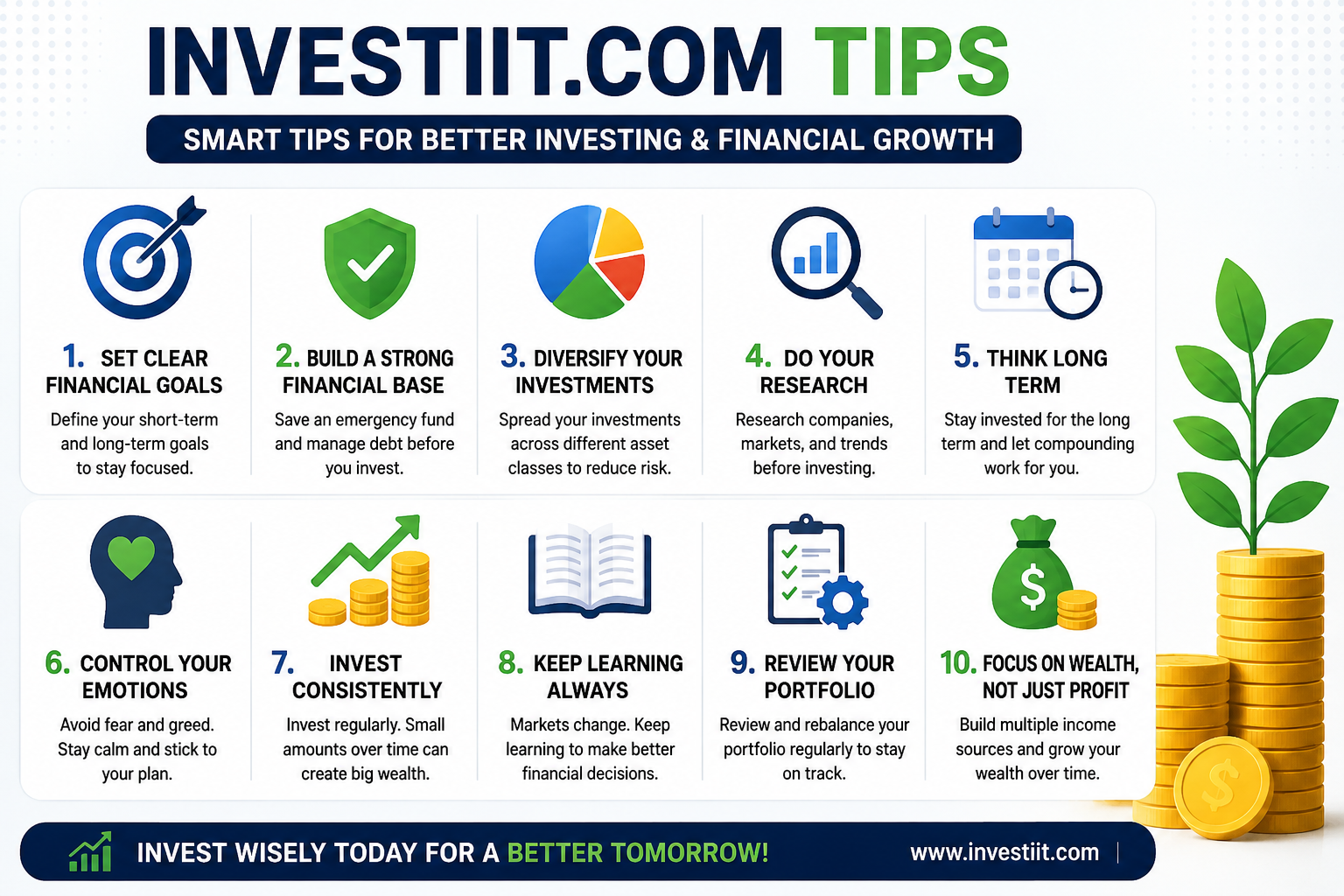
Investiit.com Tips When it comes to managing money, investing wisely, and building long-term wealth, having access to practical advice makes a significant difference. Many people search for Investiit.com tips because they want clear guidance instead of complicated financial jargon. Whether you’re just starting your investment journey or already have experience in the market, learning proven strategies can help you avoid common mistakes and make more confident financial decisions.
The world of investing changes constantly. Markets fluctuate, economic conditions shift, and new opportunities appear almost every day. This is why relying solely on outdated advice is never enough. Smart investors continue learning, adapting, and improving their strategies over time. By understanding fundamental investment principles, anyone can gradually build a stronger financial future.
This guide explores valuable Investiit.com tips that focus on budgeting, portfolio diversification, risk management, research techniques, emotional discipline, and long-term planning. These tips aren’t about getting rich overnight—they’re about making smarter choices that increase your chances of financial success over time.
Why Investment Education Matters

One of the Investiit.com Tips biggest reasons people lose money is a lack of financial education. Investing without understanding the basics often leads to emotional decisions, poor timing, and unnecessary risks. Learning how markets work gives investors the confidence to make informed choices rather than reacting to every headline or market movement.
Education also helps investors identify opportunities more effectively. Instead of following social media trends or random online advice, educated investors evaluate companies, industries, and market conditions before committing their money. This approach significantly reduces the chances of making costly mistakes.
Another important benefit is confidence. Investiit.com Tips When investors understand why they’re buying a particular stock, ETF, or mutual fund, temporary market declines become less stressful. Rather than panicking during downturns, they remain focused on their long-term financial goals.
Start with Clear Financial Goals
Every successful investment begins with a goal. Investiit.com Tips Without a clear destination, it’s difficult to create an effective strategy. Some people invest for retirement, while others save for a house, children’s education, travel, or financial independence.
Setting measurable goals allows you to determine how much money you’ll need, how long you have to invest, and how much risk you can comfortably accept. For example, someone investing for retirement in thirty years can generally tolerate more market volatility than someone planning to buy a home within three years.
Clear goals also prevent unnecessary changes to your investment strategy. Instead of chasing every trending investment, you stay focused on opportunities that align with your financial objectives.
Build a Strong Financial Foundation
Before investing heavily, it’s important to establish financial stability. One of the most valuable Investiit.com tips is making sure your basic finances are in order before taking investment risks.
An emergency fund should be one of your first priorities. Unexpected expenses such as medical bills, job loss, or vehicle repairs can force investors to sell investments during unfavorable market conditions. Having several months of living expenses saved provides financial security and flexibility.
Managing debt is equally important. Investiit.com Tips High-interest credit card balances often cost more than many investments earn annually. Paying off expensive debt before making aggressive investments usually improves your overall financial health.
Finally, maintaining a realistic monthly budget ensures you consistently have money available for investing. Even modest monthly contributions can grow significantly through compound returns over many years.
Diversification Is One of the Smartest Strategies
Diversification remains one of the oldest and Investiit.com Tips most effective investment principles. Rather than placing all your money into a single stock or industry, spreading investments across multiple asset classes reduces overall risk.
A diversified portfolio may include domestic stocks, international companies, bonds, real estate investments, exchange-traded funds (ETFs), and other financial assets. Different investments often perform differently during various economic conditions, helping stabilize long-term returns.
Diversification doesn’t eliminate losses entirely, but it helps reduce the impact of any single investment performing poorly. This balanced approach gives investors greater Investiit.com Tips confidence during market uncertainty.
Understand Your Risk Tolerance
Every investor has a different comfort level with risk. Some people remain calm during market declines, while others become anxious after small losses. Understanding your own risk tolerance helps create an investment strategy you can realistically maintain.
Age often influences risk tolerance, but personality Investiit.com Tips matters too. Younger investors generally have more time to recover from market downturns, allowing them to accept higher volatility. However, individual preferences should always be considered.
Choosing investments that match your risk tolerance reduces emotional decision-making. Investors who feel comfortable with their portfolios are far less likely to sell during temporary market declines.
Research Before Investing
One of the most practical Investiit.com tips is simple: never invest blindly. Every investment deserves careful research before committing your money.
Begin by understanding what a company actually does. Examine its products, revenue sources, competitive advantages, leadership team, and long-term growth potential. Investiit.com Tips Businesses with strong financial fundamentals often perform better over extended periods.
Investors should also review earnings reports, debt levels, cash flow, and profitability. These indicators provide valuable insight into a company’s financial health beyond stock price movements.
Finally, consider broader economic trends. Interest rates, inflation, government policies, and industry developments all influence investment performance over time.
Think Long Term Instead of Chasing Quick Profits
Many beginners expect immediate returns after Investiit.com Tips making their first investments. Unfortunately, successful investing rarely works that way. Wealth is typically built through patience, consistency, and disciplined decision-making.
Short-term market fluctuations happen regularly. Prices rise and fall due to news events, investor sentiment, and economic uncertainty. Reacting emotionally to every movement often leads to buying high and selling low.
Long-term investors focus on years rather than weeks. They understand that quality investments have historically rewarded patience despite temporary setbacks.
Avoid Emotional Investing
Emotions are among the biggest threats to investment success. Fear encourages investors to sell during market crashes, while greed pushes them toward overpriced investments Investiit.com Tips during market booms.
Creating an investment plan before emotions become involved helps maintain discipline. Once you’ve established asset allocation, contribution schedules, and long-term objectives, avoid making impulsive changes based solely on headlines.
Successful investors recognize that market volatility is normal. Instead of trying to predict every movement, they continue investing consistently according to their strategy.
Make Regular Contributions
Consistency often matters more than timing. Investiit.com Tips Investing a fixed amount every month helps build wealth gradually while reducing the stress of trying to predict market highs and lows.
This strategy, commonly known as dollar-cost averaging, purchases more shares when prices are low and fewer shares when prices are high. Over time, this can lower the average purchase cost.
Regular investing also encourages financial discipline. Instead of waiting for the “perfect” opportunity, investors steadily grow their portfolios regardless of short-term market conditions.
Keep Learning About Financial Markets
Financial education should never stop. Markets evolve continuously, introducing new industries, technologies, investment products, and economic challenges.
Reading financial news, books, company reports, Investiit.com Tips and educational resources expands your understanding of investing. Listening to experienced analysts can provide useful perspectives, although every recommendation should still be researched independently.
The most successful investors remain curious. They understand that learning is an ongoing process rather than a one-time activity.
Review Your Portfolio Regularly
Building a portfolio isn’t the final step. Periodic reviews help ensure your investments continue supporting your financial goals.
Some investments naturally grow faster than others, gradually changing your original asset allocation. Rebalancing restores the desired balance between different investment categories.
Regular reviews also allow investors to remove consistently underperforming investments while identifying new opportunities that better match their long-term objectives.
However, reviewing doesn’t mean making constant changes. Quarterly or annual evaluations are usually sufficient for long-term investors.
Understand the Importance of Compound Growth
Compound growth is often called one of the most powerful concepts in investing. Instead of earning returns only on your original investment, you also earn returns on previous gains.
The earlier someone begins investing, the more time compound growth has to work. Even relatively small monthly investments can become substantial over several decades.
Patience plays a critical role here. Investors who consistently leave their investments untouched often benefit far more than those frequently buying and selling.
Common Investment Mistakes to Avoid
Many beginners repeat similar mistakes. One of the most common is investing without a plan. Randomly buying stocks based on online recommendations rarely produces consistent long-term success.
Another mistake involves trying to time the market perfectly. Even experienced professionals struggle to predict short-term movements consistently. Missing just a few strong market days can significantly reduce long-term returns.
Ignoring fees is another overlooked issue. Management fees, trading commissions, and taxes gradually reduce investment performance. Paying attention to costs helps maximize overall returns.
Finally, many investors become overconfident after short-term success. Good results over several months don’t necessarily indicate a flawless strategy. Maintaining humility encourages continuous learning and better decision-making.
Technology Can Improve Investment Decisions
Modern investing has become much more accessible thanks to technology. Investors can research companies, monitor portfolios, compare investment options, and analyze market trends using digital tools.
Portfolio tracking applications simplify performance monitoring while budgeting apps help investors allocate more money toward long-term goals. Financial calculators estimate retirement savings, investment growth, and future financial needs.
Technology should support decision-making rather than replace critical thinking. Digital tools provide valuable information, but investors should still evaluate every opportunity carefully before investing.
Building Healthy Financial Habits
Successful investing depends on habits as much as knowledge. Saving consistently, spending responsibly, avoiding unnecessary debt, and maintaining realistic expectations all contribute to long-term financial growth.
Automating monthly investments removes emotional decision-making and encourages consistency. Investors who automate contributions often achieve better results simply because they remain committed during both good and bad markets.
Celebrating small financial milestones also helps maintain motivation. Every increase in savings, reduction in debt, or improvement in investment knowledge contributes to long-term success.
Final Thoughts
Following practical Investiit.com tips can help investors make smarter financial decisions while avoiding many common mistakes. Success in investing isn’t about predicting every market movement or finding secret shortcuts. Instead, it’s built on strong financial habits, disciplined planning, continuous learning, diversification, and patience.
Every investor begins somewhere, and no one becomes an expert overnight. The important thing is to start with realistic goals, continue learning, invest consistently, and remain committed to a long-term strategy. Markets will always experience ups and downs, but disciplined investors who stay focused on their objectives are generally better positioned to build lasting wealth.
Remember that investing is a journey rather than a destination. Every financial decision you make today has the potential to shape your future. By applying these Investiit.com tips thoughtfully and consistently, you can develop greater confidence, reduce unnecessary risks, and steadily work toward achieving your financial goals.