

Introduction
When people talk about successful FNF Kickstarter indie games, Friday Night Funkin’ (FNF) almost always enters the conversation. What started as a simple rhythm game created during a game jam quickly turned into one of the internet’s biggest gaming sensations. With its catchy music, colorful art style, memorable characters, and highly active modding community, the game captured millions of players worldwide. However, one of the most fascinating parts of its story is the FNF Kickstarter campaign, which transformed an already popular free game into one of the most successful video game crowdfunding projects ever.
The FNF Kickstarter wasn’t just about collecting money. It represented the trust that players placed in the developers and the excitement surrounding the future of the game. Fans wanted more songs, new characters, improved gameplay, online features, console versions, and an expanded story. Instead of relying on a major publisher, the developers gave the community an opportunity to directly support the game’s future, and the response exceeded everyone’s expectations.
In this article, we’ll explore everything about the FNF Kickstarter, including why it became so successful, what rewards were promised, what made fans contribute millions of dollars, how development has progressed, and what this campaign means for the future of indie game crowdfunding.
What Is the FNF Kickstarter?
The FNF Kickstarter is the official crowdfunding campaign launched by the creators of Friday Night Funkin’. After the game’s explosive popularity across YouTube, Twitch, TikTok, and various gaming communities, the development team decided to seek community funding to build a much larger version of the game than they could manage independently.
Unlike many Kickstarter campaigns that begin before a game has gained attention, Friday Night Funkin’ already had a massive fanbase. Millions of players had downloaded or played the browser version, while thousands of creators produced gameplay videos, animations, remixes, and fan art every single day. The campaign allowed these fans to directly invest in the future of a game they already loved.
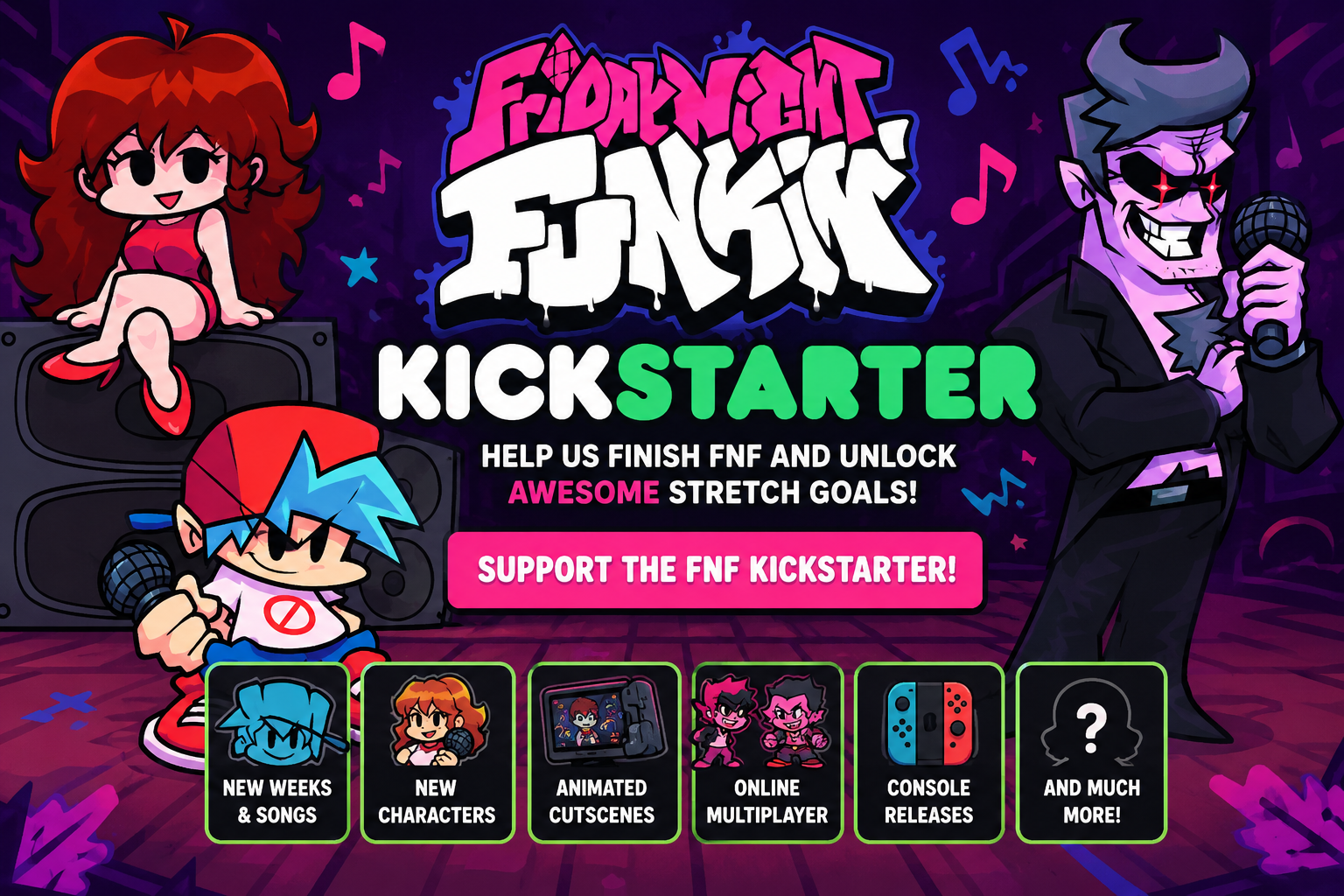
The developers outlined an ambitious roadmap featuring dozens of new songs, story chapters, expanded gameplay mechanics, multiplayer support, modding improvements, additional playable characters, animated cutscenes, and console releases. These promises made the Kickstarter feel like an opportunity to help transform an already enjoyable free game into a complete commercial-quality experience.
The Origins of Friday Night Funkin’
Friday Night Funkin’ first appeared during the Ludum Dare 47 game jam in late 2020. The game was developed by a talented team that included programmer Ninja Muffin99, artist PhantomArcade, artist Evilsk8r, and composer Kawai Sprite. Their goal wasn’t to create a global gaming phenomenon—it was simply to build a fun rhythm game inspired by classic titles while adding its own unique personality.
Players immediately connected with the game’s simple but addictive gameplay FNF Kickstarter. Instead of relying on complicated mechanics, FNF focused on rhythm battles where players matched directional arrows to the beat. Combined with expressive character animations and energetic music, the game quickly became incredibly entertaining.
The game’s popularity exploded thanks to social media. Streamers showcased it, YouTubers created challenge videos, musicians remixed the soundtrack, and artists designed original characters. The open nature of the game encouraged mod creators to release entirely new weeks, songs, and stories, extending the game’s lifespan far beyond what the original developers expected.
Why Did the Developers Launch a Kickstarter?
FNF Kickstarter Despite its popularity, creating a full-scale rhythm game requires considerable time, money, and resources. Developing original music, animations, voice acting, programming, testing, and console ports can become expensive very quickly, especially for a small independent team.
Rather than partnering with a traditional publisher, the creators chose Kickstarter because they wanted to maintain creative control over the project. Community funding allowed them to expand development while preserving the game’s unique identity without outside pressure.
The Kickstarter also gave fans an opportunity to actively participate in the game’s future. Instead of simply purchasing the finished product, supporters became part of the development journey. Many contributors felt proud knowing they helped transform one of the internet’s favorite indie games into something much larger.
How Successful Was the FNF Kickstarter?
The FNF Kickstarter became one of the most successful video game crowdfunding campaigns ever launched. What initially started with a relatively modest funding goal quickly exploded as thousands of supporters pledged money within hours of the campaign going live.
As the campaign gained momentum, social media discussions encouraged even more fans to participate. Content creators streamed the Kickstarter, gaming websites reported on its progress, and online communities celebrated each newly unlocked stretch goal. The campaign consistently exceeded expectations throughout its duration.
By the end of the campaign, millions of dollars had been pledged by supporters from around the world. The final amount demonstrated just how influential Friday Night Funkin’ had become within gaming culture. Very few indie games manage to generate that level of financial support directly from their communities.
Stretch Goals That Excited Fans
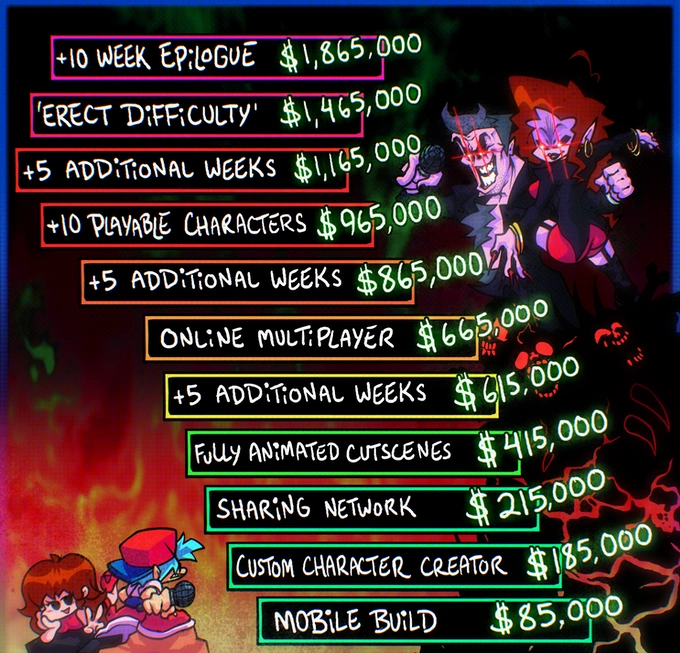
One reason the FNF Kickstarter attracted so much attention was its creative collection of stretch goals. Instead of offering only cosmetic additions, many funding milestones introduced meaningful gameplay improvements and entirely new features.
Supporters unlocked promises for additional story content, new playable FNF Kickstarter weeks, dozens of original songs, expanded character rosters, multiplayer functionality, improved animations, enhanced cutscenes, and much more. Every new milestone gave fans another reason to continue sharing the campaign.
These stretch goals created excitement throughout the crowdfunding period. Even players who had already pledged often encouraged friends to join so the community could unlock the next major feature together. This collaborative atmosphere helped maintain interest until the campaign concluded.
Rewards Offered to Backers
Kickstarter rewards have always been an important part of crowdfunding campaigns, and the FNF Kickstarter included a wide variety of supporter incentives. Lower pledge tiers typically included digital rewards, wallpapers, soundtrack downloads, and special acknowledgments from the developers.
Higher pledge levels introduced physical merchandise FNF Kickstarter such as posters, art books, clothing, collectibles, and exclusive items celebrating Friday Night Funkin’. Fans appreciated the opportunity to own official merchandise while simultaneously supporting development.
The highest reward tiers became particularly interesting because they offered rare experiences, limited-edition collectibles, and opportunities for dedicated supporters to become part of the game’s history. These premium rewards generated considerable excitement among longtime fans.
The Role of the FNF Community
One of the biggest reasons behind the Kickstarter’s incredible success was the passionate FNF community. Unlike many games that rely solely on official updates, Friday Night Funkin’ benefited from one of the largest modding scenes in modern indie gaming.
Thousands of fan-made mods introduced original characters, music, animations, and stories. Some became so popular that they attracted millions of downloads and gameplay videos. This constant stream of community-created content kept interest in the game alive even between official updates.
The community also played a major role in promoting the Kickstarter. Fans shared campaign links across Discord servers, Reddit communities, Twitter, TikTok, YouTube, and gaming forums. Their enthusiasm acted as free marketing, introducing the campaign to countless potential supporters.
Development After the Kickstarter
Crowdfunding success doesn’t instantly create finished games. After the FNF Kickstarter ended, the development team shifted its focus toward building the expanded version promised to backers. Creating high-quality content takes time, particularly for a project with ambitious goals.
Game development involves programming, music composition, animation, bug fixing, balancing gameplay, testing across different platforms, and ensuring that all promised features meet player expectations. While fans naturally became eager for updates, the developers emphasized their commitment to quality rather than rushing unfinished content.
Regular development updates have helped maintain communication with the community. Although creating a large indie game requires patience, many supporters appreciate the transparency shown throughout the ongoing development process.
Why the FNF Kickstarter Became a Gaming Milestone
The success of the FNF Kickstarter demonstrated that modern gaming communities are willing to financially support developers they genuinely trust. Instead of relying entirely on publishers or investors, talented independent creators can build strong relationships with players through transparency and quality.
The campaign also highlighted the growing importance of internet culture. Friday Night Funkin’ became popular largely because of memes, fan art, livestreams, mods, and music videos rather than expensive advertising campaigns. This organic growth created a loyal fanbase that eagerly supported the Kickstarter.
Many indie developers now view the FNF Kickstarter as proof that community-driven games can achieve extraordinary financial success when developers consistently engage with players and deliver enjoyable experiences.
Challenges That Come With Large Kickstarter Campaigns
Although the campaign was incredibly successful, raising millions of dollars also created enormous expectations. Once fans invest financially, they naturally expect high-quality results and regular communication regarding development progress.
Large budgets often mean larger projects. Features become more ambitious, development timelines grow longer, and testing requirements increase significantly. The FNF team needed to balance community expectations while ensuring that the final game remained polished.
Managing such a passionate community also presents challenges. Millions of fans have different opinions regarding gameplay, story direction, music, characters, and updates. Developers must carefully consider feedback while remaining faithful to their original creative vision.
The Future of Friday Night Funkin’
The future of Friday Night Funkin’ remains exciting for both longtime supporters and newcomers. Thanks to the Kickstarter, the developers gained resources that allow them to continue expanding the game beyond its original game jam concept.
Future updates are expected to deliver additional story content, fresh music, improved visuals, enhanced gameplay mechanics, and many of the stretch goals promised during the crowdfunding campaign. Players continue looking forward to official releases while enjoying the vibrant modding community.
Even years after its initial launch, Friday Night Funkin’ continues attracting new fans. Its memorable soundtrack, accessible gameplay, charming characters, and dedicated community have helped maintain its popularity in an industry where many indie games fade quickly.
Lessons Other Indie Developers Can Learn
The FNF Kickstarter offers valuable lessons for aspiring indie developers. Building a passionate community before launching a crowdfunding campaign can significantly improve the chances of success. Players are more likely to support projects they have already experienced and enjoyed.
Transparency is another important lesson. Regular communication, development updates, and honest discussions about progress help build long-term trust between developers and supporters. Crowdfunding isn’t simply about raising money—it involves maintaining relationships with the community.
Finally, quality always matters. Friday Night Funkin’ succeeded because the original game was genuinely entertaining. No amount of marketing can replace a fun gameplay experience. Developers who prioritize creativity and player enjoyment are far more likely to earn lasting community support.
Conclusion
The FNF Kickstarter stands as one of the greatest success stories in indie gaming history. It proved that a small rhythm game created during a game jam could grow into a global phenomenon through creativity, community engagement, and passionate fan support. Millions of players believed in the developers’ vision, contributing enough funding to dramatically expand the game’s future.
Beyond the impressive funding total, the campaign showcased the strength of modern gaming communities. Fans didn’t simply enjoy Friday Night Funkin’; they actively helped shape its future by supporting development, creating mods, sharing content, and encouraging others to participate. That level of enthusiasm is rare and demonstrates how meaningful community relationships can become.
As development continues, the FNF Kickstarter remains a remarkable example of what independent creators can accomplish without traditional publishers. Whether you’re a longtime fan, an aspiring game developer, or simply someone interested in crowdfunding success stories, the journey of Friday Night Funkin’ serves as an inspiring reminder that innovative ideas and passionate communities can achieve extraordinary results together.