

Introduction
Epoxy flooring has become one of the most popular flooring solutions for both residential and commercial spaces. Whether you are upgrading your garage, renovating a warehouse, or giving your basement a modern look, epoxy flooring offers an impressive combination of strength, durability, and visual appeal. Unlike traditional flooring materials that wear down over time, epoxy creates a seamless protective surface capable of handling heavy traffic, chemical spills, and everyday wear.
Over the past decade, epoxy flooring has evolved far beyond its industrial roots. Today, homeowners appreciate its sleek appearance, customizable finishes, and relatively low maintenance requirements. Businesses value its ability to withstand demanding environments while maintaining a clean and professional appearance. This versatility has made epoxy one of the most sought-after flooring options in numerous industries.
In this complete guide, we’ll explore everything you need to know about epoxy flooring, including how it works, its advantages, installation process, maintenance tips, common applications, potential drawbacks, and whether it’s the right investment for your property.
What Is Epoxy Flooring?
Epoxy flooring is a surface coating created by combining epoxy resin with a hardening agent. Once these two components are mixed together, they undergo a chemical reaction that forms an incredibly hard, durable plastic-like surface. This bonded coating adheres tightly to concrete, creating a floor that is resistant to impacts, moisture, stains, and chemicals.
Unlike ordinary paint, epoxy doesn’t simply sit on top of the concrete. Instead, it forms a strong bond with the surface, making it significantly more durable than traditional floor coatings. When properly installed, epoxy flooring can last for many years without peeling, cracking, or fading under normal conditions.
Modern epoxy flooring is available in numerous colors, textures, and decorative finishes. From solid colors to metallic effects and decorative flakes, property owners have countless design options to match their interior style while still enjoying the practical benefits of this advanced flooring system.
Types of Epoxy Flooring
There are several types of epoxy flooring systems available, each designed for different applications and performance requirements.
Self-leveling epoxy flooring is one of the most popular choices because it creates an exceptionally smooth and seamless finish. It’s commonly installed in garages, commercial buildings, hospitals, warehouses, and retail stores where cleanliness and appearance matter equally.
Epoxy mortar flooring represents one of the strongest flooring systems available. Made by combining epoxy resin with graded sand or quartz, this option is designed for industrial environments exposed to heavy machinery, forklifts, and constant traffic. It provides superior impact resistance and exceptional durability.
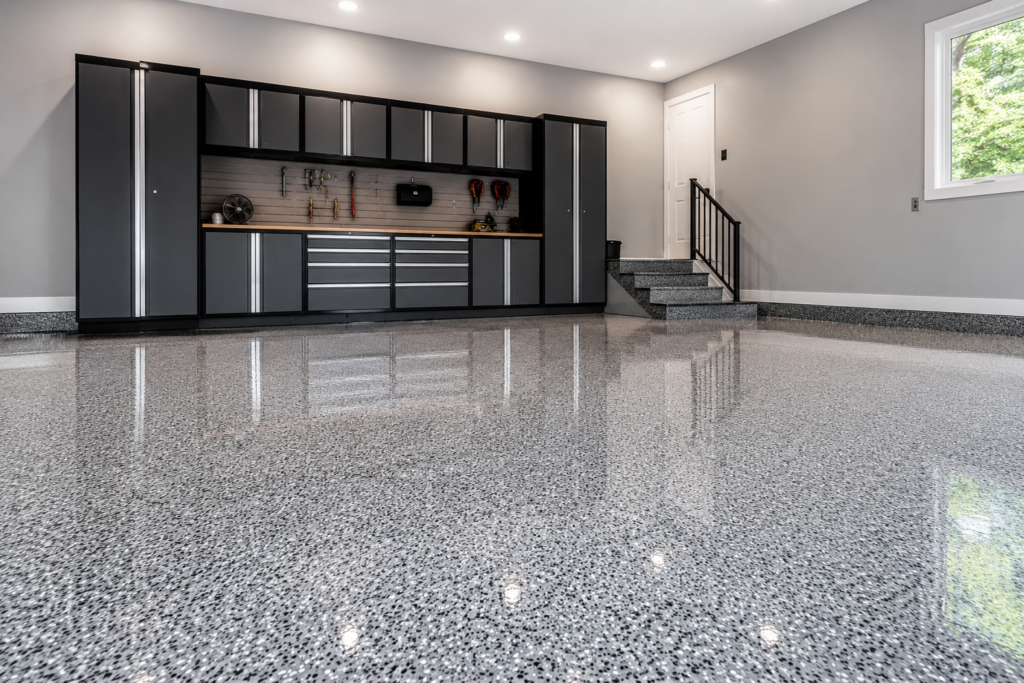
Decorative flake epoxy flooring incorporates colored vinyl flakes into the coating, creating an attractive textured appearance. This style not only improves aesthetics but also adds slip resistance, making it an excellent choice for garages, gyms, patios, and residential basements.
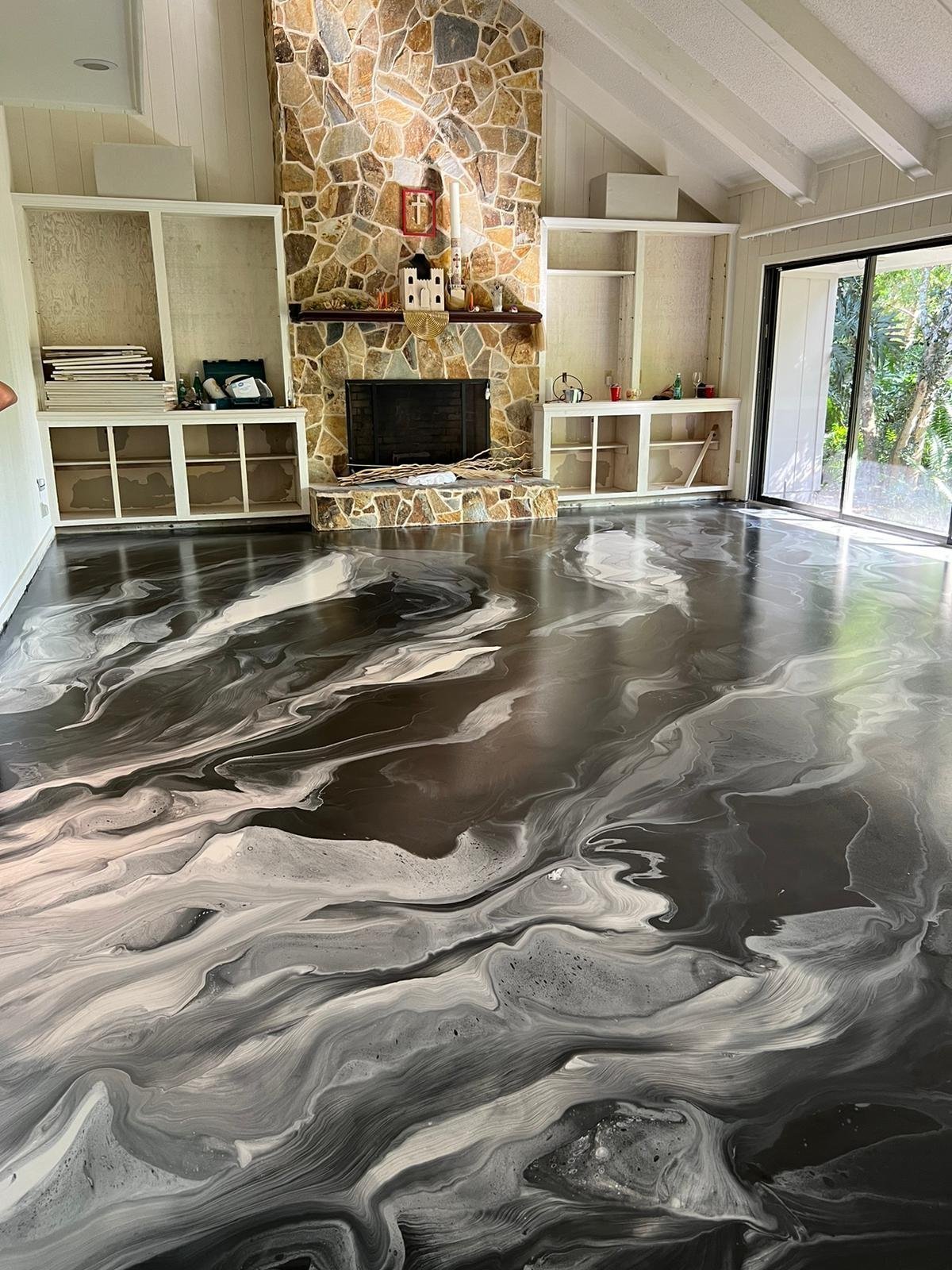
Metallic epoxy flooring has gained popularity in luxury homes and commercial showrooms. Metallic pigments create unique three-dimensional effects that resemble flowing lava, marble, or polished stone. Each installation is unique, giving every floor a custom appearance.
Quartz-filled epoxy flooring combines colored quartz grains with epoxy resin to create a highly decorative and extremely durable finish. It’s frequently used in schools, healthcare facilities, restaurants, and commercial kitchens because it offers excellent slip resistance and easy cleaning.
Major Benefits of Epoxy Flooring
One of the biggest advantages of epoxy flooring is its remarkable durability. Once cured, the surface can withstand heavy foot traffic, vehicle movement, dropped tools, and constant use without significant damage. This makes it ideal for both busy homes and demanding commercial environments.
Chemical resistance is another outstanding benefit. Oil, gasoline, cleaning products, solvents, and many industrial chemicals do not easily penetrate epoxy surfaces. Instead of soaking into the floor, spills remain on the surface where they can be cleaned quickly, helping maintain both appearance and safety.
Epoxy flooring also offers exceptional moisture resistance. Unlike porous concrete, properly installed epoxy creates a non-porous barrier that helps protect the underlying slab from water damage, mold growth, and stains. This feature makes it especially valuable in garages, basements, workshops, and manufacturing facilities.
Its seamless finish improves hygiene because dirt, dust, and bacteria have fewer places to accumulate. Hospitals, laboratories, food processing facilities, and healthcare environments often choose epoxy flooring because it supports cleaner and healthier spaces.
Another major benefit is customization. Property owners can choose from countless color combinations, decorative flakes, metallic pigments, logos, patterns, and gloss levels. This flexibility allows epoxy flooring to complement nearly any design style, from modern minimalist interiors to industrial workspaces.
Where Can Epoxy Flooring Be Installed?
Garages remain one of the most common places for epoxy flooring. Vehicle traffic, oil leaks, road salt, and heavy tools can quickly damage ordinary concrete, but epoxy provides a durable protective barrier while giving the garage a clean, professional appearance.
Commercial businesses also rely heavily on epoxy flooring. Retail stores, shopping centers, offices, restaurants, hotels, and salons benefit from its polished look, easy maintenance, and ability to handle continuous customer traffic without excessive wear.
Industrial facilities often depend on epoxy flooring because it can withstand forklifts, heavy machinery, pallet movement, and harsh chemicals. Warehouses, factories, manufacturing plants, and logistics centers frequently install heavy-duty epoxy systems to improve workplace safety and floor longevity.
Residential applications continue to grow as homeowners discover epoxy’s decorative possibilities. Basements, laundry rooms, home gyms, kitchens, workshops, and even living spaces can benefit from attractive epoxy finishes that combine style with exceptional durability.
Healthcare environments such as hospitals, laboratories, pharmaceutical facilities, and clinics value epoxy flooring because its seamless surface helps reduce contamination while allowing for thorough cleaning and disinfection.
How Epoxy Flooring Is Installed
Successful epoxy flooring begins with proper concrete preparation. Contractors first inspect the existing slab for cracks, moisture issues, and structural damage. Any defects must be repaired before installation begins to ensure long-term performance.
Surface preparation is one of the most important steps. Professionals typically grind or shot-blast the concrete to remove dirt, sealers, old coatings, and contaminants while creating the proper surface profile for maximum adhesion. Skipping this step often leads to premature coating failure.
After preparation, a primer coat may be applied to improve adhesion and reduce air bubbles. Once the primer cures, multiple layers of epoxy are installed depending on the desired thickness and application. Decorative flakes or metallic pigments are added during this stage if selected.
Finally, a protective topcoat seals the system and provides additional resistance against scratches, UV exposure, and chemicals. Depending on temperature and humidity, the floor generally requires several days to fully cure before supporting heavy traffic or vehicles.
Maintenance Tips for Epoxy Flooring
Maintaining epoxy flooring is surprisingly simple compared to many other flooring materials. Routine sweeping removes dirt, dust, and debris that could otherwise scratch the surface over time.
Regular mopping with warm water and a mild cleaning solution helps maintain the floor’s shine. Harsh acidic cleaners are generally unnecessary because epoxy naturally resists stains and dirt buildup.
Although epoxy is highly resistant to chemicals, it’s still wise to wipe up spills promptly. This helps preserve the finish while preventing slippery conditions that could create safety hazards.
Furniture legs, heavy equipment, and metal objects should use protective pads whenever possible. While epoxy is extremely durable, minimizing unnecessary abrasion will help preserve its glossy appearance for many years.
Periodic inspections allow homeowners and facility managers to identify minor scratches or wear before they develop into larger problems. Small repairs are often straightforward and can significantly extend the lifespan of the flooring system.
Common Myths About Epoxy Flooring
Many people believe epoxy flooring is only suitable for factories and warehouses. While industrial environments certainly benefit from epoxy, modern decorative finishes have made it equally popular in homes, offices, restaurants, and luxury commercial spaces.
Another common misconception is that epoxy floors are slippery. In reality, specialized anti-slip additives can be incorporated into the coating to improve traction without sacrificing appearance. This makes epoxy suitable even in areas exposed to water or frequent foot traffic.
Some homeowners assume epoxy requires constant maintenance. In fact, epoxy flooring is one of the easiest floor types to maintain. Its seamless, stain-resistant surface typically requires only basic sweeping and occasional mopping to remain attractive.
There’s also a belief that epoxy flooring peels easily. Most peeling issues occur because of improper surface preparation or excessive moisture beneath the concrete rather than flaws in the epoxy itself. Professionally installed epoxy systems can last well over a decade with proper care.
Potential Drawbacks to Consider
Despite its many advantages, epoxy flooring isn’t perfect for every situation. Installation requires careful preparation and proper environmental conditions. Moisture problems in the underlying concrete must be addressed before application to prevent future failures.
The installation process also requires curing time. Depending on the product used, homeowners may need to avoid walking or driving on the floor for several days. This temporary inconvenience should be considered during renovation planning.
Direct sunlight may gradually cause some epoxy coatings to yellow over time, especially in areas with large windows or outdoor exposure. Fortunately, modern UV-resistant topcoats significantly reduce this issue and help maintain color stability.
Initial installation costs can be higher than basic concrete paint. However, the extended lifespan, reduced maintenance, and improved durability often make epoxy flooring a more cost-effective investment over the long term.
Is DIY Installation a Good Idea?
DIY epoxy flooring kits are widely available and can work well for smaller residential projects. However, achieving professional-quality results requires proper surface preparation, careful mixing, correct application techniques, and attention to environmental conditions.
Many DIY failures occur because homeowners underestimate the importance of grinding the concrete. Simply cleaning the floor is usually not enough to ensure strong adhesion. Without proper preparation, peeling and bubbling become much more likely.
Professional installers use commercial-grade equipment, moisture testing, industrial grinders, and high-performance epoxy formulations that often outperform consumer products. Their experience also helps them avoid common mistakes that may shorten the floor’s lifespan.
For garages, workshops, and small residential spaces, experienced DIY enthusiasts may achieve satisfactory results. However, larger commercial or industrial projects generally benefit from professional installation due to the complexity involved.
Cost of Epoxy Flooring
The cost of epoxy flooring varies depending on several factors, including floor size, concrete condition, coating thickness, decorative options, and labor costs in your region.
Basic residential garage coatings tend to be the most affordable option, while decorative metallic finishes, quartz systems, and heavy-duty industrial installations require a larger investment because of additional materials and labor.
Although upfront costs may seem higher than some alternatives, epoxy flooring often proves economical over time. Its exceptional durability reduces repair expenses, while its low maintenance requirements help minimize ongoing cleaning and replacement costs.
When evaluating pricing, property owners should focus on long-term value rather than initial installation costs alone. A properly installed epoxy floor can provide years of reliable performance, making it an investment that pays for itself through reduced maintenance and improved durability.
Conclusion
Epoxy flooring has earned its reputation as one of the most reliable, durable, and visually appealing flooring solutions available today. Whether you’re renovating a residential garage, upgrading a commercial showroom, or protecting an industrial facility, epoxy delivers a unique combination of strength, style, and long-term performance.
Its seamless surface, resistance to chemicals and moisture, customizable appearance, and relatively simple maintenance make it suitable for an impressive range of applications. While proper installation is essential for achieving the best results, a professionally installed epoxy floor can provide decades of dependable service with minimal upkeep.
As more homeowners and businesses recognize the long-term value of epoxy flooring, its popularity continues to grow across virtually every industry. If you’re searching for a flooring solution that combines beauty with exceptional durability, epoxy flooring remains one of the smartest investments you can make for your property.